Hi everyone – I'm a long-time palmistry enthusiast and have been reading palms for over 12 years now. I've done thousands of readings – in person, over video, through photos, and even at events and fairs. I'm not a professional fortune-teller in the "predict your future" sense, but I've spent over a decade studying the lines, testing interpretations, and watching how they play out in people's real lives.
I wanted to create this thread because I see a lot of questions from beginners – and even intermediate readers – about the four main lines and what they actually mean. There's so much conflicting information out there: old-school vs. modern, Western vs. Eastern, dramatic vs. grounded. I want to offer a clear, practical, and non-doom framework that anyone can understand, whether you're just curious or looking to deepen your practice.
The Four Main Lines – An Overview
Before I dive into each line individually, let me give you the big picture. In Western palmistry, there are four major lines that most readers start with:
Heart Line – the emotional compass. It reveals how you love, how you express affection, and your emotional temperament.
Head Line– the thinking line. It shows your learning style, communication habits, decision-making process, and how you process information.
Life Line– the vitality line. It reflects physical health, energy levels, major life changes, and resilience – NOT your lifespan.
Fate Line – the career and life-purpose line. It indicates your career path, sense of direction, and how much control you feel over your destiny.
Each line works in conversation with the others. You can't read one line in isolation and get the full picture – it's about the combination, the depth, the texture, and the flow of all lines together.
The Heart Line – Deeper Than Romance
Location: Runs horizontally across the top of the palm, just beneath the fingers, starting under the index or middle finger and curving toward the edge under the pinky.
What it reveals: Your emotional nature, love language, relationship patterns, and how you handle feelings.
Common patterns and what they mean:
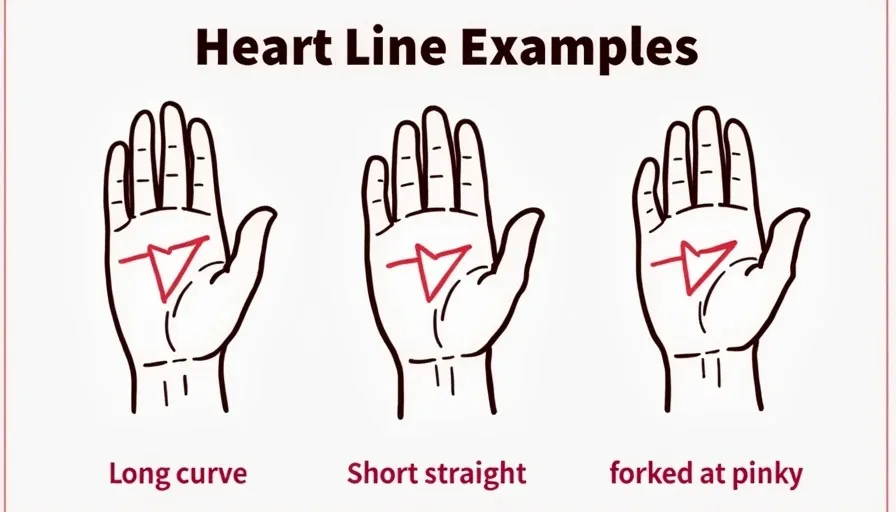
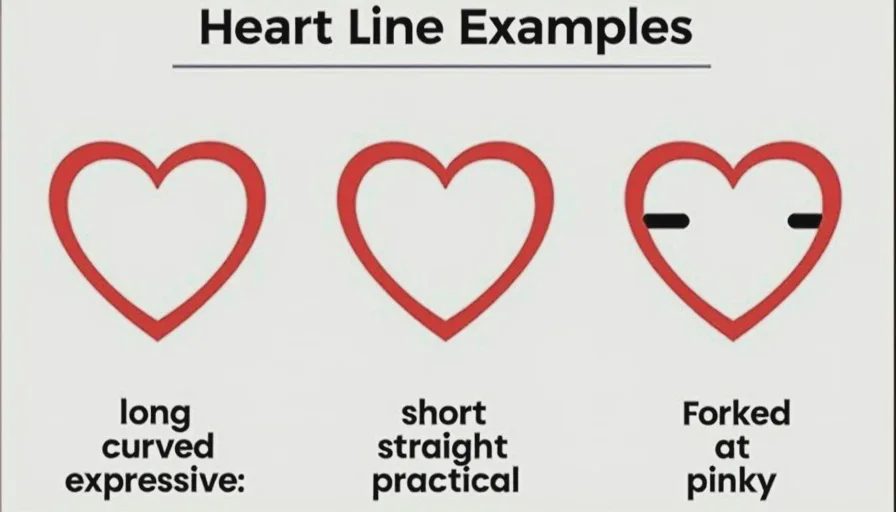
Long and curved – you're emotionally expressive, romantic, and wear your heart on your sleeve. You give and receive love with warmth.
Short and straight – you're more practical with emotions. You might take longer to open up, but when you do, you're deeply loyal.
Deep and clear – emotional stability and honesty. You know what you feel and you're not afraid to share it.
Faint or broken – emotional inconsistency or past heartbreak that shaped you. You might be cautious in love.
Forked at the end (under pinky) – this is a popular one! It often means you have two ways of loving – maybe you give love differently than you receive it. Some say it indicates a dual emotional nature or artistic sensitivity.
What I've learned in 12 years: The heart line is the most misunderstood line. People often think it's just about romance, but it actually covers all forms of love – friendships, family bonds, your relationship with yourself. I've seen people with "negative" heart line patterns who are incredibly loving, and people with "positive" patterns who struggle emotionally. Context matters.
The Head Line – How You Think and Decide
Location: Runs horizontally across the middle of the palm, starting between the thumb and index finger, heading toward the edge under the ring or pinky finger. It usually sits below the heart line.
What it reveals: Your intellectual style, problem-solving approach, learning habits, and communication preferences.
Common patterns and what they mean:
Long and straight – logical, practical, detail-oriented thinker. You process information step-by-step.
Long and curved (downward) – creative, intuitive, imaginative. You think in big-picture terms, sometimes zoning out.
Short and straight – you're a "get to the point" person. You value action and efficiency over overthinking.
Short and curved – quick instincts, gut-driven decision-making.
Separated from lifeline – independent thinker who likes to do things your own way.
Joined to lifeline – cautious thinker who considers consequences before acting.
What I've learned in 12 years: The head line is fascinating because it often tells you how you think, not what you think. I've seen lawyers with short head lines and artists with long straight ones – your profession isn't written here, but your cognitive default is. If you're always stuck between logic and intuition, your head line likely has a slight curve or a fork.
The Life Line – The Most Misunderstood Line
Location: Curves around the base of the thumb, starting at the edge of the palm between thumb and index finger, sweeping down toward the wrist.
What it reveals: Physical vitality, energy reserves, major life transitions, and your relationship with your own health and body.
What it does NOT reveal: Your exact lifespan. Please repeat that to yourself if needed.
Common patterns and what they mean:
Long and deep – robust health, steady energy, and a strong physical constitution.
Short but deep – not a short life! It can mean you pour your energy into intense bursts, or that you're highly resilient in a specific area.
Faint or shallow – you may be prone to fatigue or need more rest than others. Not illness – just lower energy reserves.
Broken – a major life shift (moving, career change, loss) that affected your physical or mental well-being.
Sister line (a parallel line) – a backup of vitality. You've built resilience and can bounce back from hardships.
Chain-like – periods of stress, low energy, or health fluctuations.
What I've learned in 12 years: The lifeline anxiety is real – I've seen so many people panic over a short or faint lifeline. Here's what I tell everyone: I've read palms of 80-year-olds with short lifelines and 30-year-olds with long, deep ones. The lifeline is about quality of life, not quantity. If it's short, ask yourself: do you feel like you're living fully? Do you have enough energy for what matters? Those are the real questions.
The Fate Line – Your Sense of Direction
Location: Runs vertically up the center of the palm, from the wrist toward the base of the middle finger (the Saturn mount).
What it reveals: Your career path, life direction, and how much you feel in control of your own journey. It's sometimes called the "Saturn line."
Common patterns and what they mean:
Long and clear – you've had a defined path or a strong sense of purpose since early adulthood.
Faint or absent – you're still figuring it out, or you don't feel tied to a single direction. This is more common than you'd think and nothing to worry about.
Broken – significant career shifts, job changes, or interruptions in your path. Often indicates voluntary changes (like quitting to start a business) rather than forced ones.
Starts at lifeline – you're influenced by family expectations or early circumstances in your career choices.
Branching toward ring finger – creative or public recognition pulling you in a new direction.
Multiple fate lines – you have multiple interests or talents, maybe a side hustle or parallel career.
What I've learned in 12 years: The fate line is the most optional line. Many people don't have a strong one, and they still have perfectly fulfilling careers. A faint fate line doesn't mean "no success" – it often means you're adaptable, multi-talented, and not boxed into one identity. I've seen people with absent fate lines become CEOs and people with deep fate lines change careers five times. It's more about how you navigate your path than about the path itself.
How the Four Lines Work Together – Not a Solo Act
One of the biggest mistakes beginners make is reading each line in isolation. But palmistry is like reading a sentence – each word matters, but you need the full sentence to understand the meaning. Here's how they connect:
Heart + Head: Your emotions and thoughts together shape your decisions. If both lines are strong, you're balanced. If one dominates the other, you tend to lead with that side.
Life + Head: Your energy and your thinking style influence your lifestyle choices. A long head line with a short lifeline might mean you're mentally active but physically tire quickly.
Fate + Life: Where your fate line starts (or doesn't start) relative to your lifeline tells you whether your path is self-made or influenced by others.
The conversation between these lines is what makes palmistry fascinating – it's never a simple checklist.
Ask Me Anything – Your Turn!
Now that I've laid out the basics, I'd love to hear from you. This is an AMA, so I'm opening the floor:
Have a question about one of the four lines? Ask below.
Confused about a specific pattern in your palm? Describe it and I'll offer my interpretation (feel free to upload photos too).
Heard something scary about a line? Let's untangle it together.
Want a deeper dive on heart line vs. head line differences? I'm happy to go into more detail.
Curious about minor lines (marriage, sun, intuition)? I can touch on those too.
I'll check this thread daily and respond to every question. I'm especially here for beginners and anyone who's felt intimidated by palmistry. No judgment, no gatekeeping, no doom. Just honest, grounded conversations about what our hands might be telling us.
A Few Ground Rules for This Thread
To keep this helpful for everyone:
No "fortune-telling" requests – I won't predict death, disaster, or specific future events. If that's what you're after, I'm not your person.
Photos welcome – if you upload a palm photo, describe what you see first. I'll add my perspective.
Be specific – "What does my heart line mean?" is hard to answer without context. Tell me a bit about how you love, and we'll connect the dots.
Respect others – this is a learning space for everyone, from complete beginners to fellow veterans.
A Final Thought from 12 Years of Reading
I've learned that the lines aren't destiny – they're a reflection of our tendencies, habits, and patterns. They change as we grow, as we heal, and as we make conscious choices. I've seen lines deepen, fade, split, and even reappear over the years. Your palms are a map of your journey so far – not a fixed destination.
The real value of palmistry isn't knowing what will happen. It's understanding yourself a little better so you can make better decisions, love more intentionally, and live more fully.
Thanks for reading, and I can't wait to hear your questions!