Alright, I'm going to wade into what might be the most heated debate in palmistry – and I'm planting my flag firmly on one side. The heart line tells you more about how someone loves than the head line ever could.
I know some of you will disagree. Some of you will argue that the head line shapes how we express love, that our thinking patterns define our relationship style, or that without the head line, the heart line is just raw emotion with no direction. I've heard all those arguments. And I'm ready to take them on – respectfully, but firmly.
Before I lay out my case, let's define what we're actually comparing:
Heart line – the emotional compass. It reveals your capacity for love, your love language, your emotional availability, and how you give and receive affection.
Head line – the thinking line. It shows your communication style, decision-making process, problem-solving approach, and how you process information – including in relationships.
Both matter, obviously. But if I have to choose which one gives me deeper, more reliable insight into how someone loves, I'm picking the heart line every time. Here's why.
Reason #1: Love is an emotion, not a logic problem
This might sound obvious, but it needs to be said: at its core, love is a feeling. It's warmth, vulnerability, attachment, and care – all of which live in the emotional realm. The heart line is the direct physical representation of that realm on your palm. It's literally called the heart line for a reason.
When I read a heart line, I can see:
Depth – how deeply you invest in relationships
Curve – whether you're romantic or practical with affection
Breaks – where you've been hurt and how you've healed
Forks – whether you give and receive love differently
Chains – emotional complexity or past turbulence
These are all direct indicators of how a person loves. The head line, on the other hand, tells me how they think about love – not how they actually feel it. And there's a huge gap between thinking and feeling.
I've read palms with brilliant head lines – long, straight, clear – belonging to people who could articulate their relationship needs perfectly but were emotionally unavailable. Their head line was a masterpiece of logic; their heart line was faint or broken. And their love lives were a disaster. They could tell you exactly what they should do in a relationship, but they couldn't feel their way through one.
If you want to know how someone loves, look at their emotional wiring – not their intellectual framework.
Reason #2: The heart line reveals love languages in a way the head line cannot
We all know the five love languages – words of affirmation, quality time, physical touch, acts of service, and receiving gifts. While there's no direct one-to-one mapping in palmistry, the heart line gives strong clues about which love languages a person naturally leans toward.
Consider these patterns:
A long, curved, deep heart line – this person loves warmly and openly. They're likely to prefer words of affirmation, physical touch, and quality time. They express love through presence and affection.
A short, straight, clear heart line – this person loves practically. They might show love through acts of service or practical support. They're not overly demonstrative, but they're dependable.
A heart line with a fork toward the index finger – they love intellectually as well as emotionally. They need mental connection, deep conversation, and shared ideas – a blend of words and ideas.
A chained or islanded heart line – they love intensely but unpredictably. They might swing between affectionate and distant, which could indicate an anxious attachment style.
Now, can the head line tell you any of this? Not really. The head line tells you how they communicate about love, not what they need to feel loved. A person with a straight head line might articulate their needs clearly, but if their heart line is faint, they might not even know what they actually need emotionally.
I've seen couples where one partner had a beautifully curved heart line and the other had a straight, practical one. They loved each other but spoke different love languages – and the friction was visible in their palms long before it showed up in their arguments.
Reason #3: The head line changes with context – the heart line is more stable
Here's another observation from years of reading: the head line is more responsive to environment, education, and career. It can deepen, sharpen, or even shift as you learn new skills or take on new roles. The heart line, on the other hand, tends to reflect core emotional wiring that remains fairly consistent throughout life – unless there's major trauma or healing.
This means the head line can sometimes mislead you in a relationship reading. Someone might have a head line that's sharp and analytical because they're a lawyer or an engineer – but that doesn't mean they love like a robot. Their heart line, which is more stable, will tell you their true emotional nature, beneath the professional veneer.
I've done readings for people in high-logic careers who had heart lines that were deep and curved – and they were some of the most emotionally generous people I've met. Their head line was just a tool they used at work; it didn't define how they loved.
So if you're trying to understand a partner, don't let their professional head line fool you. Read their heart line.
Reason #4: The heart line directly connects to relationship outcomes
In my experience, the heart line is far more predictive of relationship satisfaction and longevity than the head line. Why? Because relationships succeed or fail based on emotional compatibility, emotional regulation, and emotional expression – not intellectual compatibility alone.
Consider two people with identical head lines – both logical, clear communicators, good problem-solvers. But one has a deep, continuous heart line, and the other has a broken, faint one. The first one will likely navigate conflicts with emotional awareness and empathy. The second one might shut down or disconnect when things get heated. Their head lines didn't save the relationship; their heart lines determined the outcome.
I've seen this play out dozens of times. Give me a heart line reading, and I'll tell you more about someone's relationship patterns than a full personality test. Give me a head line reading, and I'll tell you how they'll argue – but not whether they'll stay or leave.
But wait – I'm not dismissing the head line entirely
Now, before the head-line defenders come for me, let me acknowledge its role. The head line is crucial for understanding:
How someone communicates in a relationship – do they avoid confrontation? Are they blunt? Do they overthink?
How they make decisions about love – are they impulsive or cautious? Do they weigh pros and cons?
What they value intellectually in a partner – do they need deep conversation, shared interests, or mental stimulation?
These are all important aspects of "how someone loves." Love isn't pure emotion – it involves thought, communication, and choice. A person with a brilliant head line can navigate relationship logistics beautifully. They can remember anniversaries, plan thoughtful dates, and articulate feelings clearly.
But love without emotional depth is hollow. And the heart line is where that depth lives.
So I'm not saying the head line is useless – I'm saying that if I had to choose one line to understand how someone loves – the core experience of love – it's the heart line, hands down.
Now, I want to hear from the head-line crowd
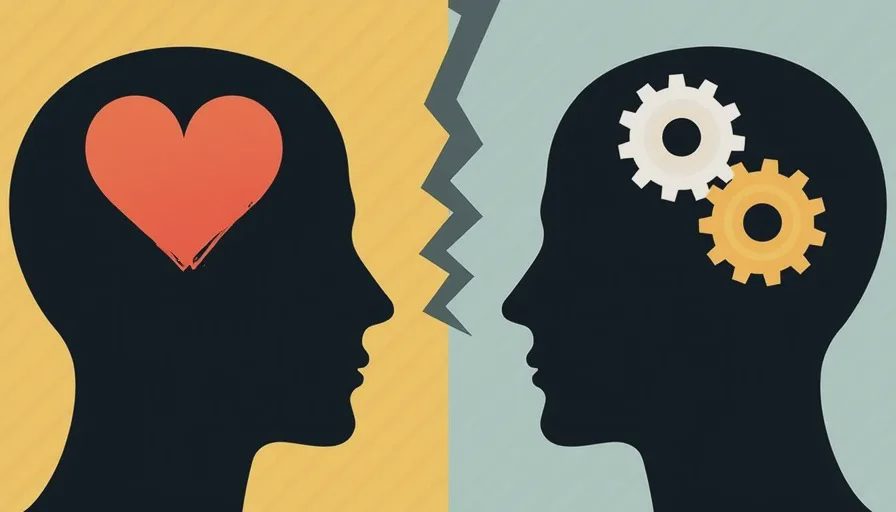
I know there are readers here who put more weight on the head line for relationships. Maybe you've seen cases where the head line predicted communication styles that were more critical than the heart line's emotional signals. Maybe you've read palms where the heart line seemed irrelevant compared to the head line's clarity.
So here's your chance: argue back.
Do you think the head line tells you more about how someone loves? If so, why?
Have you had a reading where the head line contradicted the heart line, and the head line was right?
Do you believe that love is more about choice and communication than feeling – and if so, does that make the head line more important?
What about people with no head line (rare but possible) – can they love deeply?
I'm genuinely open to being convinced. I've been reading palms for about eight years, and I've changed my mind on several things – but this one, I'm pretty stubborn on. That said, a good debate is how we all learn.
A challenge for you
Here's what I'd like to see in the comments:
If you're team heart line, share a specific case where the heart line gave you insight that the head line didn't.
If you're team head line, share a counter-case – where the head line revealed something crucial about love that the heart line missed.
If you're undecided, ask questions – I'll do my best to answer from my perspective, and hopefully others will chime in from theirs.
I'll be active in this thread all week, responding to every thoughtful reply. Let's keep it respectful, evidence-based, and grounded – no doom, no gatekeeping, just honest palmistry.
A final thought – before the arguing begins
Maybe the answer isn't about choosing one over the other. Maybe it's about understanding that love is a conversation between the heart and the head – and the palm shows us the balance. A strong heart line with a weak head line might mean you love passionately but struggle to communicate. A strong head line with a weak heart line might mean you say all the right things but can't quite feel them.
The most loving people I've ever read had both lines in harmony – deep, clear, and balanced. But if I'm forced to pick, I'm picking the heart line every time. Because at the end of the day, love is something you feel – not something you think your way through.