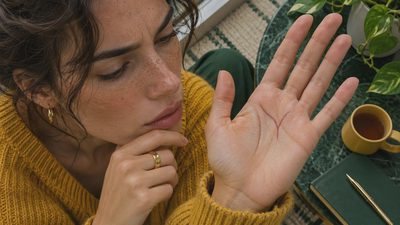

Seeing a broken life line palm in a photo or on your own hand can create an immediate jolt of worry. The line may look interrupted, divided, faint, or crossed by another mark, and traditional palmistry books often give dramatic explanations. I prefer a calmer starting point: first describe what is physically visible, then consider several possible interpretations. A palm is not a medical chart, calendar, or sentence about your future.
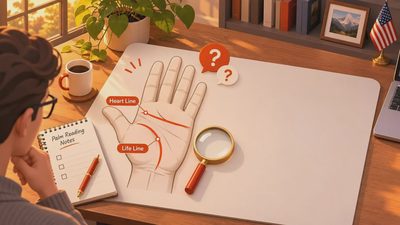
The life line is the curved line that generally sweeps around the base of the thumb, beginning between the thumb and index finger and traveling toward the wrist. In traditional palm reading, it is associated with vitality, physical rhythm, major transitions, and the way someone engages with daily life. It is not reliably used to predict how long a person will live. That distinction matters, especially when a line looks short or interrupted.
What a broken life line palm actually looks like
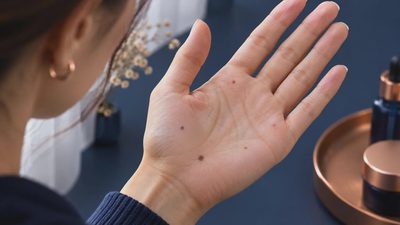
Before interpreting a broken life line palm, look closely in good natural light. A true interruption usually means the crease appears to stop and restart, but palms contain many fine lines that can make a continuous crease look fragmented. Dry skin, shadows, camera glare, folds caused by gripping a phone, and low-resolution images can all create false breaks.
Compare both hands if possible. Many palmists traditionally read the dominant hand as a picture of current choices and habits, while the nondominant hand is treated as a broader indication of inherited tendencies or early patterns. These are traditions, not scientific rules, but comparing the hands can provide useful context. A line that appears broken on one hand yet continues smoothly on the other may be read differently from a clear interruption on both.
Notice the size and character of the gap. Is it a narrow split connected by a faint bridge? Does the line resume in the same curve, or does it begin farther inward? Is another line crossing the area? These observations are more useful than jumping straight to a frightening conclusion.

Traditional interpretations without the doom
In traditional palmistry, a break in the life line can symbolize a change in routine, environment, identity, or personal priorities. Someone might connect it with moving across the country, changing careers, ending a long relationship, recovering from an exhausting period, or becoming more independent. The interpretation depends on the surrounding marks and, just as importantly, the person's lived experience.
Some readers distinguish between a clean gap and an overlap. A clean gap may be associated with a sharp transition, while overlapping segments can suggest adjustment or a gradual redirection. A branch moving toward the fingers might be read as ambition or new interests. A branch pointing toward the wrist may be connected with travel, rest, or a need to return to familiar ground. None of these symbols has one universal meaning.
For a broken life line palm, I would ask: “What changed around the time this area seems to correspond with?” That question keeps the reading reflective rather than predictive. If no life event fits, that is useful information too. Palmistry should make room for uncertainty.
Why the life line is not a lifespan meter
The most important reassurance is simple: a broken life line palm does not mean death, a fixed illness, or a guaranteed disaster. Palm lines vary with genetics, skin texture, age, occupation, hydration, and how the hand is held. Creases can deepen, fade, and become easier or harder to see over time.
Palmistry is a symbolic tradition, not a diagnostic method. If you are worried about pain, numbness, a new skin change, or another physical symptom, speak with a qualified medical professional rather than seeking an answer in your palm. A photograph of a crease cannot assess circulation, stress, or disease.
This grounded approach does not make a reading meaningless. It simply moves the focus from “What terrible event is coming?” to “What part of my life deserves attention?” That might mean setting a boundary, making time for recovery, planning a move carefully, or acknowledging that a former version of your routine no longer works.
How to read the surrounding lines
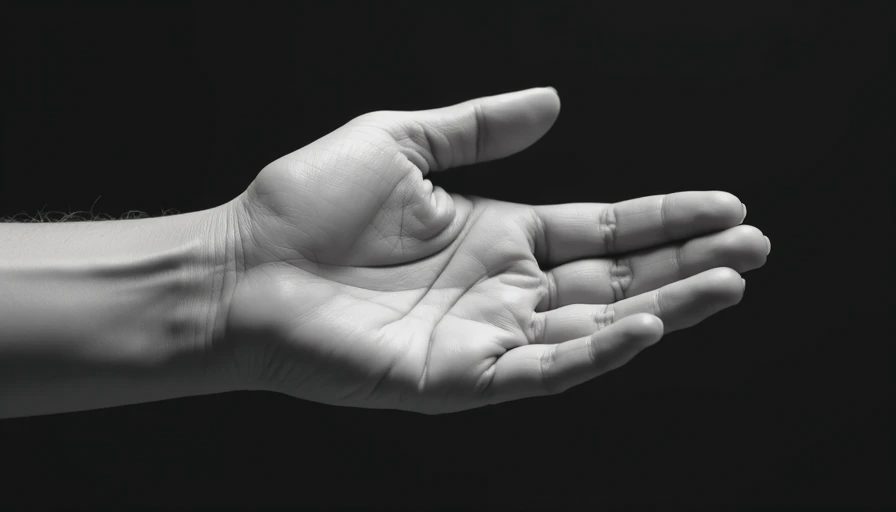
A line should rarely be interpreted alone. Look at the head line, which traditionally relates to thinking and decision-making, and the heart line, often associated with emotional expression and relationships. The mounts, or padded areas of the palm, can also add traditional context. The mount of Venus sits inside the life line near the thumb and is commonly linked with affection, energy, comfort, and attachment to everyday pleasures.
For a broken life line palm, check whether support lines run parallel to the main crease. Some palmists call a nearby parallel line a guardian or sister line and associate it with resilience, support, or a second source of energy. Again, treat that as a lens, not proof. A strong-looking parallel mark does not cancel real stress, and a faint palm does not indicate weakness.
It can help to take one photo with the hand relaxed and another with the fingers gently extended. Do not stretch the skin aggressively. Label which hand is dominant, note the lighting, and write down what you noticed before reading interpretations online. That small process reduces the chance that a dramatic post will decide the meaning for you.
Turning a reading into a thoughtful gift
A palm discussion can lead naturally to a personal gift, especially when the reading connects with a real transition. For someone starting a new job, consider a compact leather notebook, a durable pen, or a desk plant that fits their workspace. For a friend recovering from burnout, a soft eye mask, a tea sampler, or a local massage gift card may express care more clearly than a mysterious fortune-themed object.
If a partner enjoys symbolism, choose something subtle: a simple bracelet engraved with a meaningful date, a framed hand illustration, or a small journal with a note about the chapter they are entering. Keep the recipient's habits and budget ahead of the palmistry theme. A $15 notebook used every day can be more meaningful than a $100 ornament that sits in a drawer.
When sharing a broken life line palm reading as part of a gift, phrase it gently. You might write, “This made me think about how much you have changed and how steadily you keep moving forward.” That gives the person a story rather than a warning. The best gift does not claim to decode their destiny; it shows that you noticed their life.
A calm way to discuss your own palm
Start with observation: “There seems to be a faint interruption near the middle of the curve.” Add context: “I recently changed jobs, so that symbolism feels interesting.” Then leave room for disagreement: “Does another interpretation fit better?” This approach invites conversation instead of presenting a palm reading as an authority.
If you post a photo for feedback, crop out identifying details, use even lighting, and include both palms when you can. Mention whether the image is mirrored and whether the hand is relaxed. Avoid asking strangers to tell you how long you will live. Ask what features they notice and how different traditions interpret them.
A broken life line palm can be a prompt to reflect on transitions, energy, and support, not a forecast of misfortune. Look carefully, compare possibilities, and connect the symbols to your actual story. What change in your life feels most visible right now, and what small gift would honor that chapter?