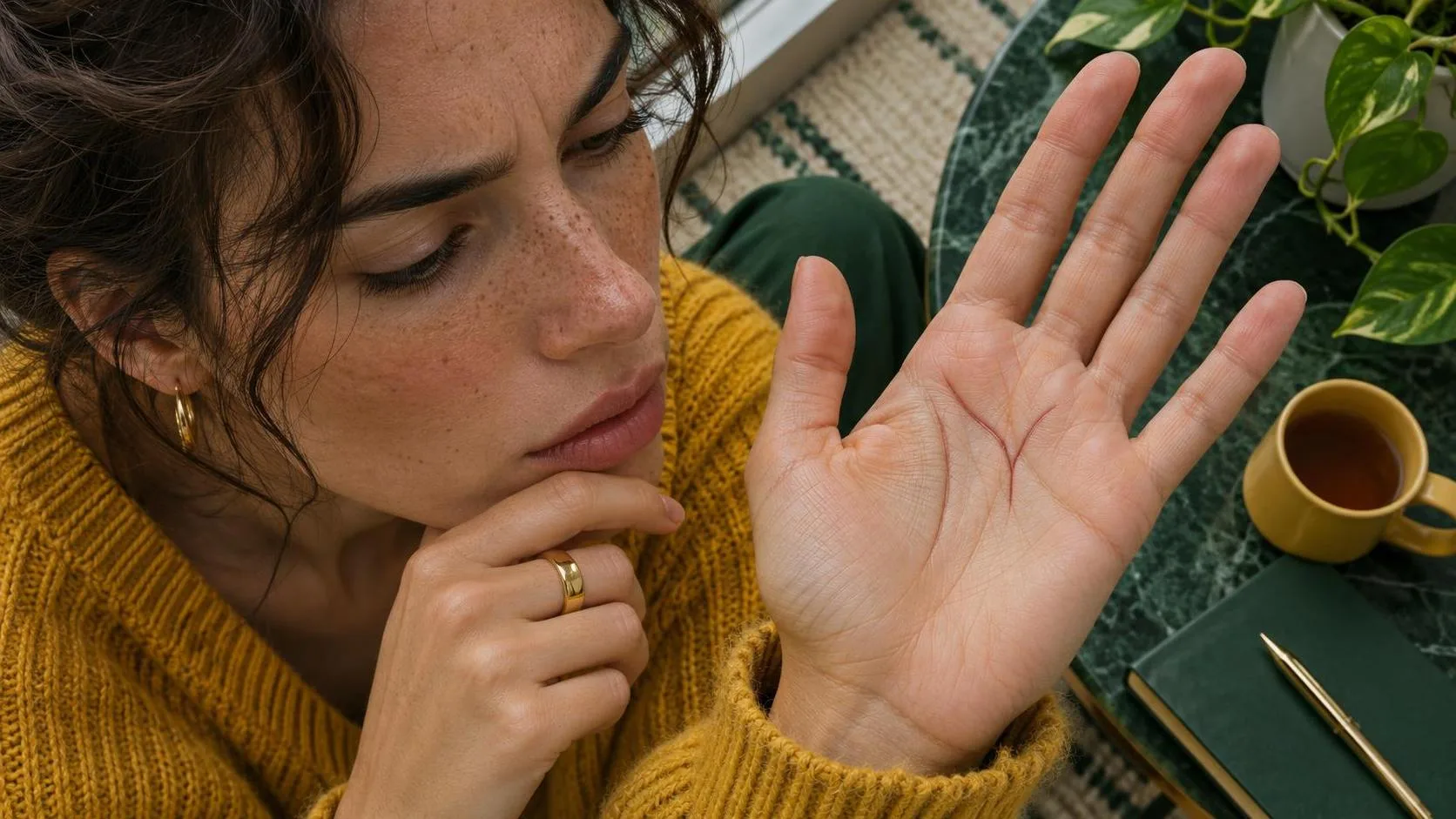
If your search for palmistry heart line forked began with a little Y-shaped split under your fingers, the short answer is that some palm readers associate it with flexibility in emotional expression. Others see a balance between different approaches to relationships. Neither meaning is a prediction or a personality test: start by noticing where the branches go, then ask whether either interpretation feels useful in your actual life.
First, find the line and the fork
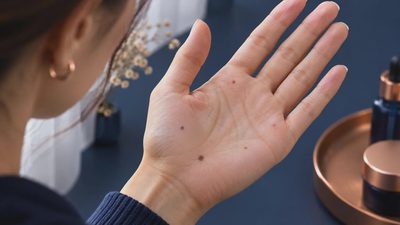
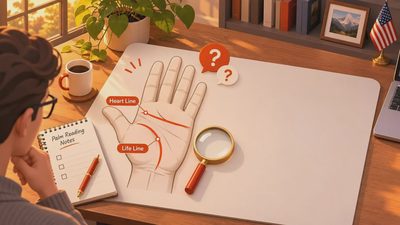
Open your hand in comfortable light, with your fingers relaxed rather than stretched. The heart line is usually the uppermost major horizontal crease on the palm, beginning near the little-finger side and running toward the area below the index and middle fingers. Its shape and visibility vary from hand to hand.
A fork is a point where one line appears to divide into two or more branches. You may see a clear Y near the end of the heart line, a small branch pointing upward along its course, or several fine lines that make the ending harder to trace. For a first look, follow the deepest continuous crease rather than trying to assign meaning to every tiny mark.
Check whether the apparent split is actually a separate crease crossing the heart line. Tilt your palm gently toward the light; shadows can make intersecting lines look joined. If you still cannot tell, it is perfectly reasonable to call the feature ambiguous and leave it there.
palmistry heart line forked interpretations
In many palm-reading traditions, a fork invites a conversation about more than one way of handling feelings. One common interpretation is that the person can hold emotion and practical judgment together. Another is that they may adapt their expression of affection to different situations. A reader might also understand a fork as a reminder that close relationships often involve competing needs, such as independence and connection.
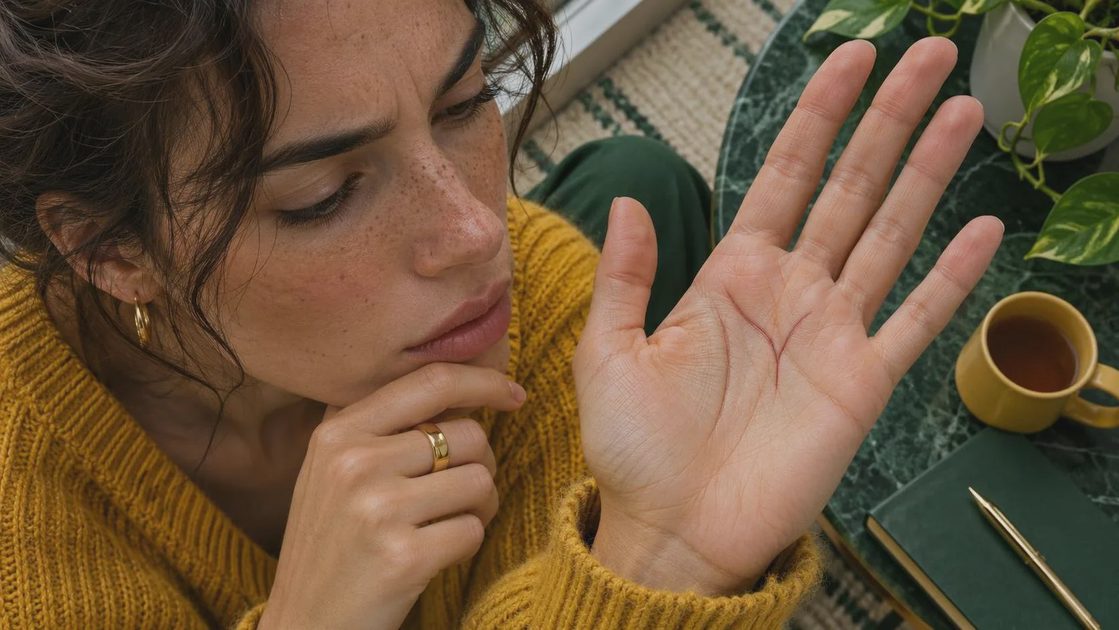
Those are symbolic possibilities, not findings about your character. Palmistry does not have scientific support as a way to determine personality, relationship compatibility, or future events. If a description feels familiar, treat it as a prompt for reflection, not proof that a crease revealed a hidden truth.
For example, a split might invite you to ask whether you communicate differently with a partner than with a friend. You may recognize a thoughtful adjustment to each relationship, or you may find that the interpretation does not fit at all. Both responses are useful: the conversation matters more than making the line agree with a book.
Does the direction of the branches matter?
Some readers pay particular attention to a fork at the end of the line, beneath the index and middle fingers. In one common approach, a branch reaching toward the index-finger area is associated with ideals in love, while a branch toward the middle-finger area is connected with a more practical or self-protective outlook. Together, the two are sometimes read as a blend of those tendencies.
Not every tradition assigns the same meanings to those areas. The important first step is descriptive: does one branch actually reach toward either finger, or does the fork end lower in the palm? A small split does not need to stretch all the way to a finger to be a fork, and a faint branch can be difficult to distinguish from ordinary skin texture.
Branches elsewhere along the heart line can also catch the eye. Some readers interpret an upward branch as an opening toward connection or optimism, while others put more weight on the whole line than on a single offshoot. A downward branch may receive a different symbolic reading, but it is not evidence of heartbreak or a warning that a relationship will fail.
If the fork is faint, interrupted, or crowded by other creases, avoid turning its exact angle into a definitive statement. A photograph or a second look on another day can help you describe what you see; it cannot settle which symbolic system is right.
Which hand should you read?
Palm readers differ on this, too. A common convention is to look at the dominant hand for how a person currently expresses themselves and the non-dominant hand for underlying tendencies or background. Other readers use different rules, so ask which approach someone is using before comparing interpretations.

Put both palms side by side and notice whether the split appears on one hand or both. You do not need matching lines for a reading to be valid, and a difference between hands does not mean something is wrong. Write down the physical observation first: “The line on my dominant hand has two visible branches near its end.” Then add any interpretation separately.
That little separation keeps a fun reading from becoming an anxious search for the one correct answer. If one palm seems especially hard to read, dry skin, lighting, and the position of your hand can affect what is visible. Wash and dry your hands, relax them, and try again in even daylight rather than drawing conclusions from a shadow.
How to share a palm photo and ask for a useful reading
Choose a clear, evenly lit photo that shows the whole palm from the wrist crease to the bases of the fingers. Keep the hand relaxed and the camera roughly above it; a sharp close-up of the fork can be a helpful second image. If you want a comparison between hands, share both and say which one is dominant.
You can also describe the feature without posting a picture. Tell the community where the line begins, where the split appears, and which direction each visible branch takes. Leave out identifying details you would rather keep private, and remember that a palm photo is still a personal image.
A good question makes room for disagreement: “I see two branches under my index and middle fingers. Would you read that as one fork, or as a line crossing another?” You can follow with the personal part: “Does the idea of balancing closeness and independence resonate with me?”
If this reading inspires a gift, begin with the recipient rather than the crease. Someone who likes writing might appreciate a small journal with a note about the conversations you enjoy together; someone who prefers shared time might value an invitation for a walk and coffee. The story is not that their hand guarantees a trait. It is that you noticed a way they connect with you. What does this little fork bring to mind about your own relationships?