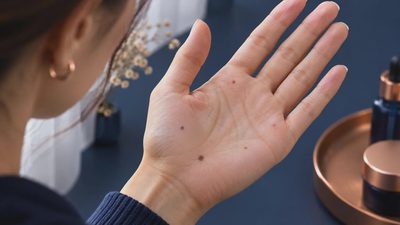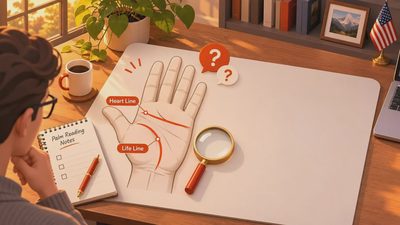
A double life line palm can look dramatic the first time you notice it: two curved markings seem to travel around the base of the thumb, following a similar route toward the wrist. Before attaching a big prediction to the feature, take a clear photo in good light and look closely. Palmistry is a traditional interpretive practice, not a medical test or a fixed map of the future. Here is what readers usually notice; now ask yourself which description fits your real life.
What a double life line palm actually looks like
The life line is the arc that begins between the thumb and index finger and sweeps around the fleshy mount at the thumb's base. A second marking can appear inside or beside that arc. It might be a genuine parallel line, a partial line that fades halfway down, or a crease created by the hand's movement and skin texture. Those differences matter to a palm reader.
Look at both hands rather than studying one palm in isolation. Some readers traditionally use the dominant hand to discuss current choices and habits, while the other hand suggests inherited tendencies or an earlier pattern. That is a symbolic framework, not a proven rule, but comparing the hands can make the observation more balanced. Notice whether the second line is deep, clean, broken, short, or visible only under angled light.
A useful close-up does not need special equipment. Wash and dry your hands, relax your fingers, place the palm flat, and use indirect daylight. A phone photo taken with the flash turned off often shows fine lines better than a dim room.
Traditional meanings of a double life line palm
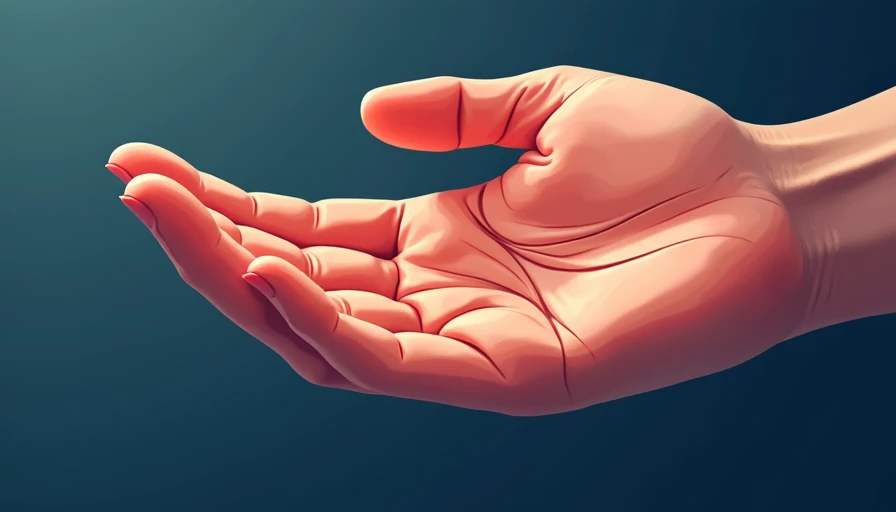
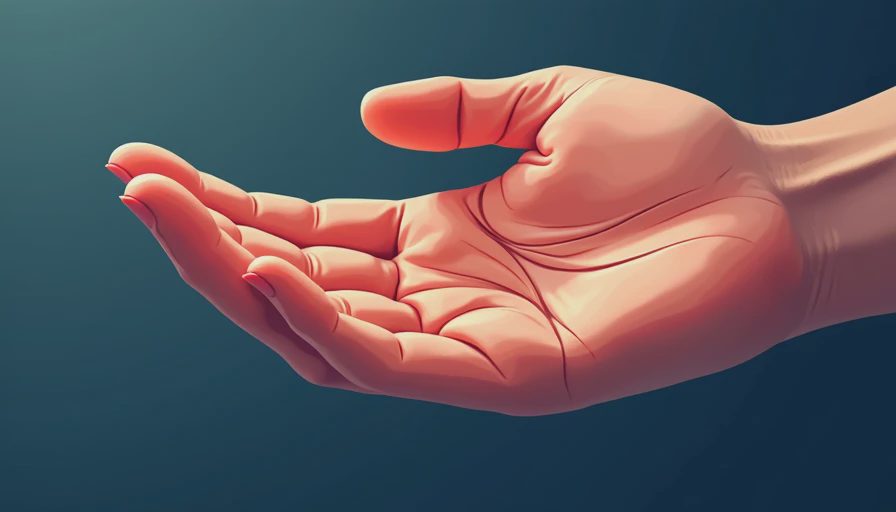
In many palmistry traditions, a second life line is called a sister line, guardian line, or Mars line. The usual interpretation is extra drive, resilience, protection, or a strong reserve of energy. Some readers describe it as evidence that a person can recover after demanding periods or draw support from family, friends, faith, or community.
That language should be held lightly. A double life line palm does not prove that someone is invulnerable, destined for a long life, or protected from accidents. It also cannot diagnose health, predict death, or replace advice from a qualified professional. The most grounded reading turns the symbol into a reflection prompt: Where have you shown persistence? Who helps you regain your balance? What routines keep your energy steady?
The line's character can shape the conversation. A clear parallel marking may be read as consistent support, while a faint or interrupted line may invite a discussion about support that appears at particular stages. Those are possibilities, not verdicts. Your actual experiences remain more important than the crease itself.
Does the second line mean a longer life?
This is the question people ask most often, and it deserves a careful answer. Traditional palmistry does not provide a reliable way to calculate lifespan. The length of a life line is not a calendar, and a short-looking arc does not signal an early death. Hand size, flexibility, hydration, lighting, and natural creasing can all change what you see.
When someone worries about a double life line palm, I usually suggest replacing the question “How long will I live?” with “What gives me stamina, and where do I need care?” That shift keeps the reading useful without feeding fear. A person who sees a strong parallel marking might celebrate persistence while still booking routine appointments, resting after overwork, and taking practical safety steps.
For a group discussion, describe what is visible before offering an interpretation. “There is a faint line inside the main arc, and it becomes clearer near the middle of the palm” is more helpful than “You are protected.” Observation gives the other person room to decide whether the symbolism resonates.
How to compare the two hands
Start by photographing the left and right palms from the same distance. Do not stretch the fingers aggressively, because tension can deepen temporary folds. Compare the beginning of each arc, the distance between the lines, and the point where a second marking fades. A double life line palm on one hand but not the other can become a conversation about changing habits rather than a supernatural contradiction.
You can also note the surrounding features. The head line crosses the palm below the fingers, and the heart line generally runs higher, beneath the fingers. Avoid confusing a nearby crease with a second life line simply because it runs in the same general direction. A beginner's sketch or a clear annotated photo can help when asking an experienced community member for feedback.
If readers disagree, that is normal. One person may see a Mars line; another may see a branch or a normal crease. Good palmistry discussion makes room for both views and returns to the hand's visible details.

Turning the reading into a thoughtful gift
A palm feature can inspire a gift, but the best choice reflects the recipient's everyday life. Someone who relates to the double life line palm as a symbol of recovery might enjoy a durable journal, a soft travel pouch, or a small engraved keychain with a private phrase. A friend who values quiet rituals may prefer a ceramic mug, a linen eye mask, or a palmistry reference book with room for notes.
Keep the symbolism subtle unless you know the person enjoys mystical language. A simple card could say, “For all the ways you keep going,” without claiming that a line controls their fate. For a partner, pair the object with a story: mention a difficult move, a new job, or the afternoon they helped everyone else feel steady. The meaning comes from the memory, not from an expensive price tag.
A practical budget can guide the search. Around $15 to $30, choose a handwritten note, pocket notebook, or small handmade charm. From $30 to $75, consider a personalized leather journal, framed palm photograph, or quality candle paired with a reading card. Above that range, spend only when the item matches a known hobby rather than assuming symbolism alone will make it special.
A grounded way to share your interpretation
If you are reading a double life line palm for a friend, begin with consent. Ask whether they want a playful traditional reading, a detailed comparison, or simply help identifying the markings. Describe two or three plausible meanings instead of announcing one truth. For example, the line could represent resilience in a symbolic reading, a reminder of supportive relationships, or merely a visible crease formed by the hand.
End with a question that returns authority to the person holding the hand: “Where have you noticed this kind of support in your life?” That question often creates a better conversation than a dramatic prediction. If the feature makes someone anxious, stop interpreting it and reassure them that palm lines cannot forecast death or diagnose illness.
A curious, kind reading does not need certainty. The palm offers an image; the person supplies the story. If the image leads to a useful reflection or a meaningful present, it has already done enough.
Final perspective on the double life line palm
The double life line palm is traditionally associated with reserve, resilience, and support, especially when a second arc follows the main life line. It is not evidence of guaranteed protection, extraordinary health, or a predetermined future. Inspect both hands, describe what you can actually see, and let the interpretation remain flexible.
If you are choosing a gift, connect the symbol to a real memory and the recipient's habits. A modest object with a thoughtful story will usually feel more personal than a dramatic fortune-telling promise. What does your second line remind you of: your own persistence, the people who steady you, or a chapter you are still learning to understand?