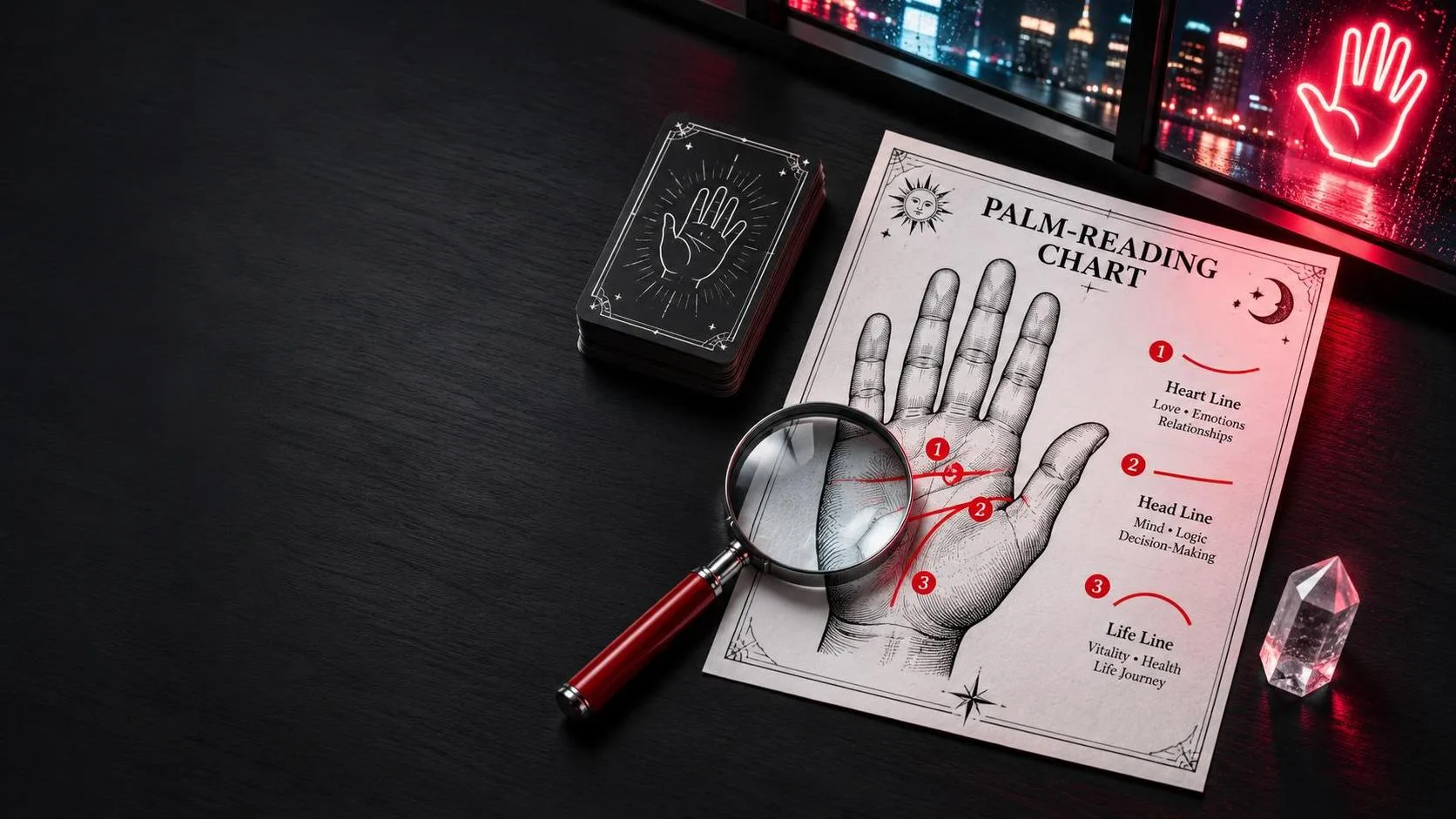
A palm opens in front of you, and three creases catch the light. So how do you read someone's palm? Start by asking permission, look at the overall hand, and trace the heart, head, and life lines. Describe what you see before sharing what palmistry traditionally associates with each feature. Then ask what, if anything, resonates. Palm reading is a reflective practice, not a proven way to determine personality, health, or the future.
You don't need a special gift or a perfect chart. You do need good light, a relaxed hand, and a willingness to let the person disagree. Think of the lines as conversation starters, not evidence about someone's character.
How do you read someone's palm to begin?
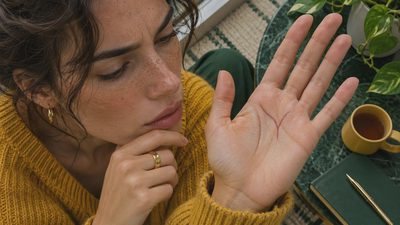
Ask the person to rest their hand palm-up with the fingers comfortably extended. Avoid pulling the skin tight: that can make the creases harder to follow. A window or a lamp angled across the palm can help reveal the deeper lines without forcing anyone to squint.
Many palm readers begin with the dominant hand, traditionally associated with a person's present life or outward expression. They then compare the other hand, sometimes read as reflecting inherited tendencies or inner life. These associations vary by tradition; neither hand holds a secret, objectively correct answer. If the person uses both hands for different tasks, ask which one they would like to start with.
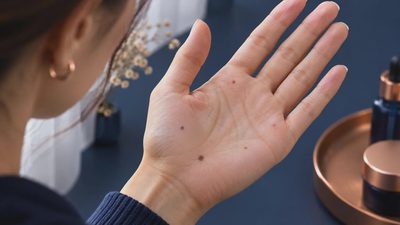
Take in the whole hand before looking for individual marks. Is the palm broad or narrow? Are the fingers relatively long or short compared with the palm? Notice the texture and the most visible creases without assigning a meaning to every detail. Hands naturally vary, and work, age, movement, and skin condition can affect their appearance.
Find the three major lines
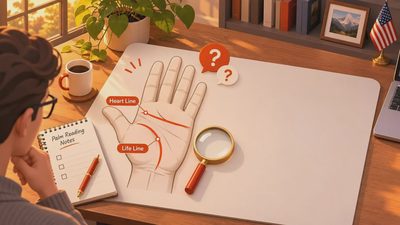
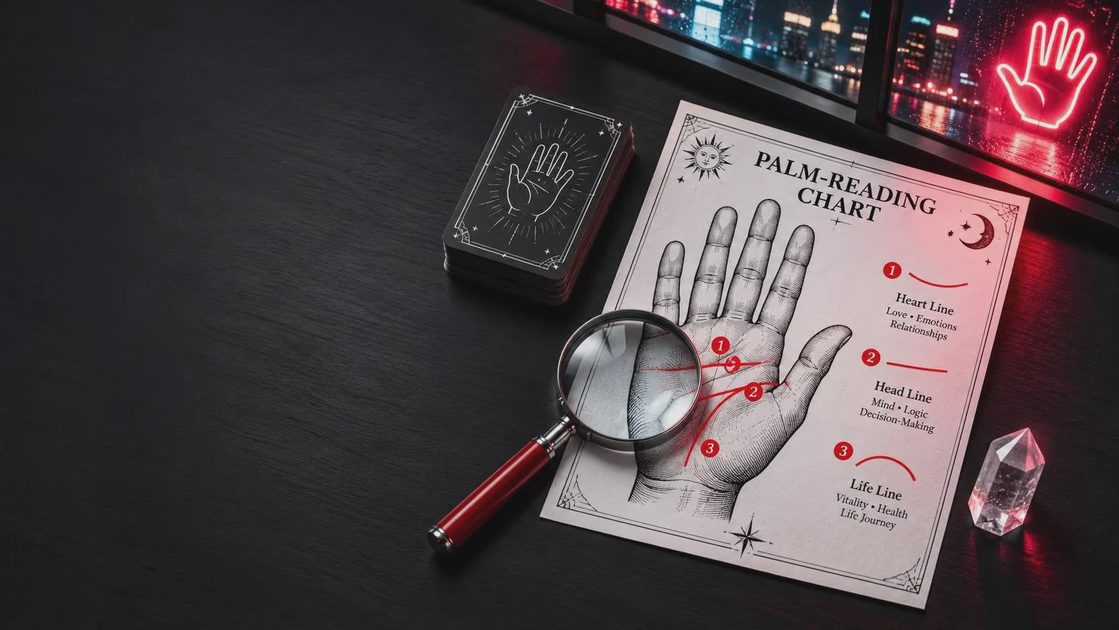
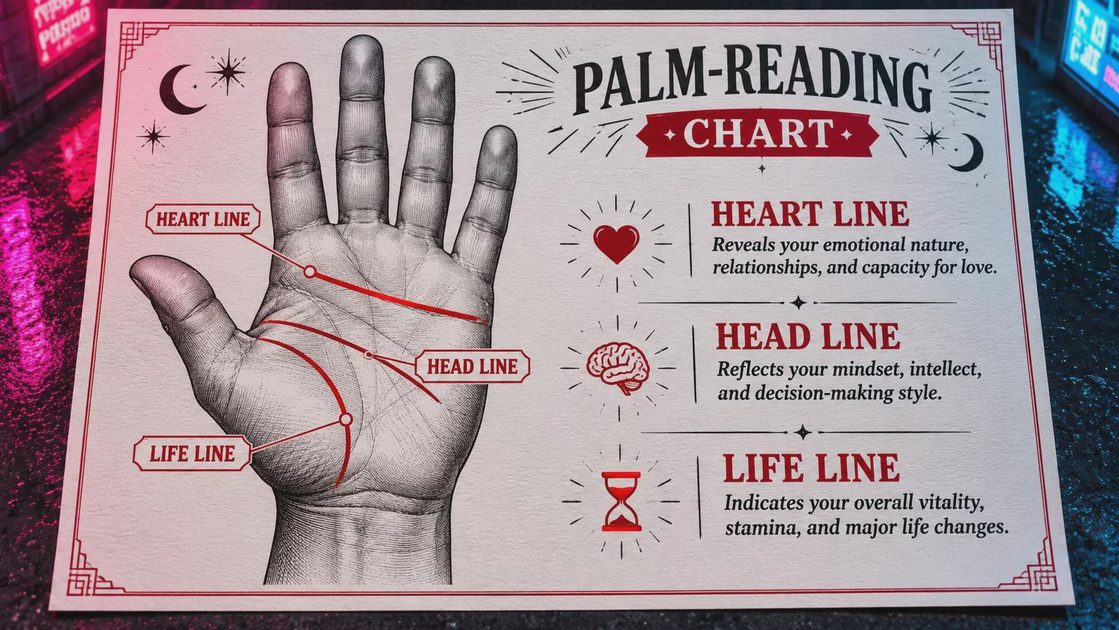
The heart line is usually the uppermost major horizontal crease, running across the palm below the fingers. In palmistry, it is often connected with emotional expression and relationships. A reader might describe a pronounced curve as a traditional sign of expressive affection, while a straighter-looking line may be associated with a more reserved style. Neither tells you whether someone is a good partner. Try asking, “How do you like people to show they care?”
The head line generally crosses the middle of the palm, starting near the thumb side. Readers often associate it with thinking and communication. A long, relatively straight line may be interpreted as a preference for practical thinking; a line that slopes downward is sometimes linked with imagination. Real people can be both practical and imaginative, so treat the distinction as an invitation to talk rather than a label.
The life line curves around the base of the thumb toward the wrist. Traditionally, readers connect it with vitality, life experience, or a person's approach to change. Its length does not predict how long someone will live. A short, faint, or interrupted line is not a warning of death or illness. If a person feels anxious about it, say that plainly and move on to something they would rather discuss.
Not every hand has three separate, easy-to-follow lines. Some people have a single transverse palm crease where the head and heart lines might otherwise appear separate. Don't force a match to a diagram or attach a diagnosis to the difference. You can simply observe the crease and ask whether the person wants to explore a traditional interpretation.
Notice the details without overreading them
Once you've located the major lines, look for changes in depth, branches, and places where creases meet. Describe each detail first: “This line looks deeper here,” or “I can see a small branch near the end.” In traditional readings, a branch might suggest a shift in attention or another influence. It could also just be a natural crease. If the mark is ambiguous, it's fine to say so.
Some readers also look for a fate line, a vertical line that may run from the lower palm toward the middle finger. It is traditionally associated with work, direction, or a sense of purpose. Plenty of hands have a faint line or no obvious one. That does not mean a person lacks ambition or direction; ask what gives their days meaning instead.
The fleshy areas below the fingers and around the thumb are called mounts. For example, the area at the base of the thumb is traditionally called the mount of Venus and associated with affection or enjoyment. Pressing or measuring it won't reveal how loving someone is. If a feature is hard to distinguish, skip it rather than inventing a story.
Turn an observation into a useful conversation
A kind reading leaves room for the other person to be the expert on their own life. You might say, “Your heart line curves upward. Some readers connect that shape with open emotional expression. Does that fit, or do you show affection another way?” The observation is visible, the interpretation is clearly traditional, and the question lets the person answer honestly.
Avoid absolute statements such as “You can't commit” or “A difficult event is coming.” Don't use lines to diagnose a condition, assess someone's safety, or advise them to make a major financial or relationship decision. If a feature worries someone, remind them that palmistry cannot forecast harm and ask whether they'd like to stop.
If you share a hand photo in a community, ask permission first and avoid including names, documents, or other identifying details in the frame. Let the person decide whether the image stays online. A clear, evenly lit photo of the whole palm is more useful than a heavily filtered close-up.
Let a gift grow from the conversation
A palm reading can lead to a thoughtful gift, but the person's habits matter more than a line. If a conversation about the head line reveals that they love writing, a simple notebook with a note about an idea they shared may feel personal. If they prefer time together to objects, plan a walk and bring their favorite snack instead.
Choose a budget that feels comfortable, and don't assume symbolism must become jewelry or anything expensive. The story is the part that makes the gesture meaningful: “You told me you wanted more time to write, so I thought of this.” What did the person say they actually enjoy or need?