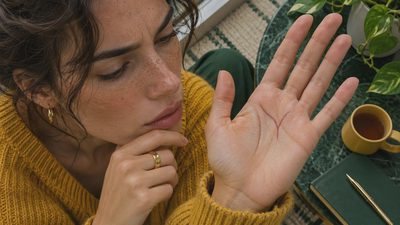
A one line palm is exactly what it sounds like: the major crease across the palm appears as one continuous line instead of two more familiar horizontal lines. In traditional palmistry, readers often call this a single transverse crease or a simian line. The name can sound dramatic, but the feature itself is simply a variation in palm creasing. Here is what readers usually notice; now tell us what fits your real life.
What readers notice in a one line palm
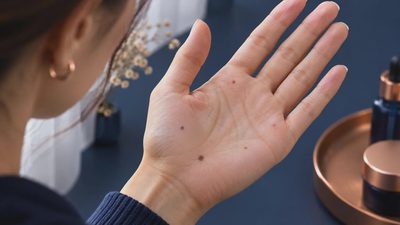
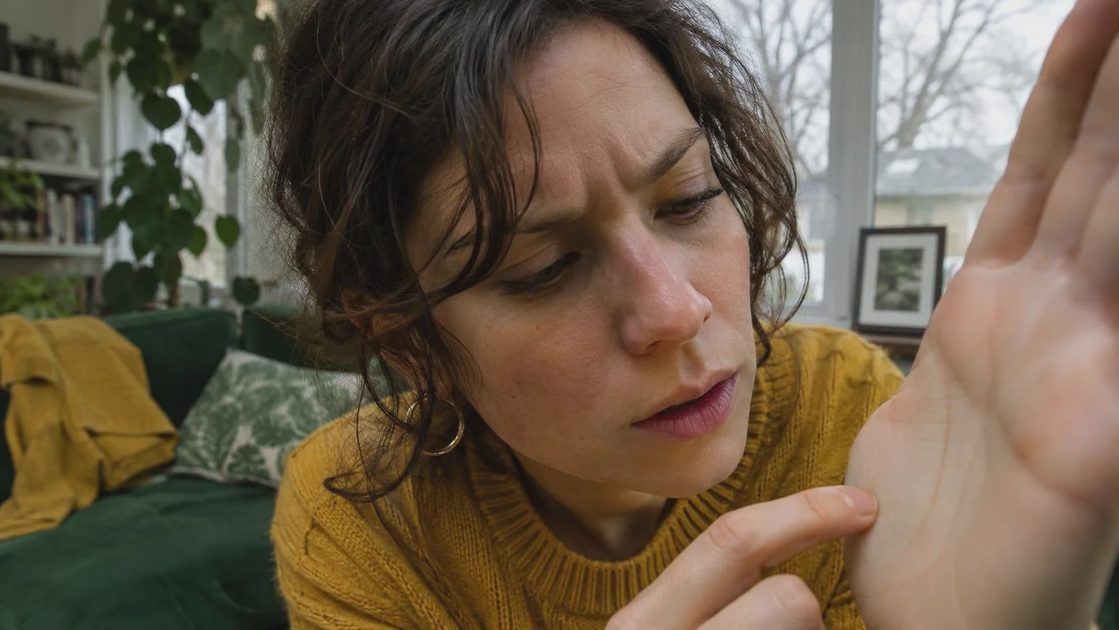
Start with observation rather than interpretation. Hold the hand relaxed, palm facing you, and look at the line beneath the fingers. In many hands, the head line and heart line appear separately. With a one line palm, those creases can join, overlap, or look like one strong band running from one side of the hand to the other. Lighting, dry skin, and the angle of the hand can make a partial connection look complete, so take a clear photo before making a firm judgment.
Also compare both hands. Some people have the feature on only one palm, while others have a similar pattern on both. Traditional readers may treat the dominant hand as a picture of current habits and the nondominant hand as a picture of early tendencies or inherited patterns. That is a symbolic framework, not a measurement of personality. A useful reading leaves room for the person to say, “That part fits,” or “That is not my experience.”
A one line palm can be bold and easy to spot, but it does not automatically mean someone is intense, difficult, unusually gifted, or destined for a particular life. The crease is one detail among many, including the shape of the hand, finger proportions, mounts, and other lines.
Traditional meanings without the doom
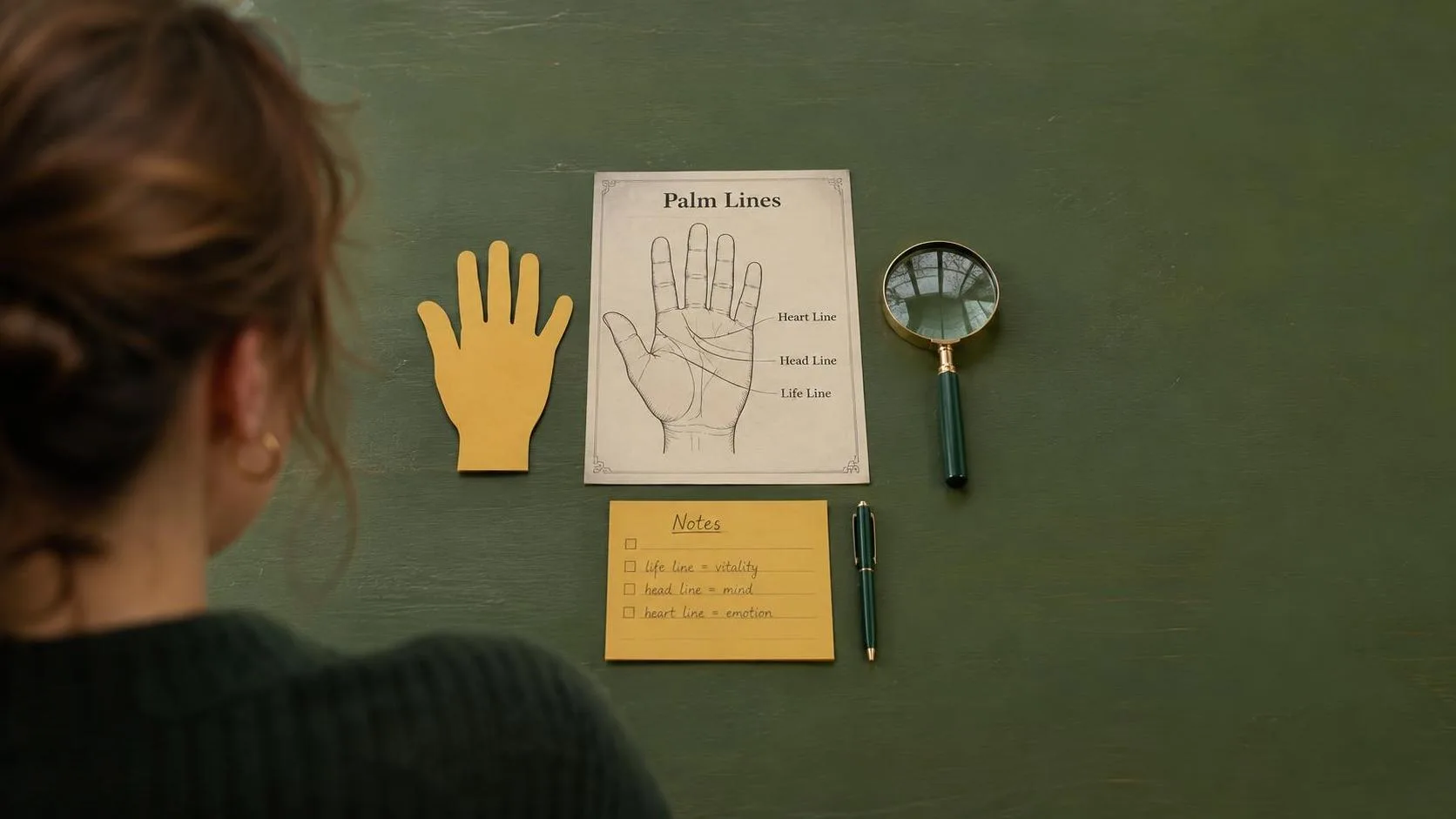
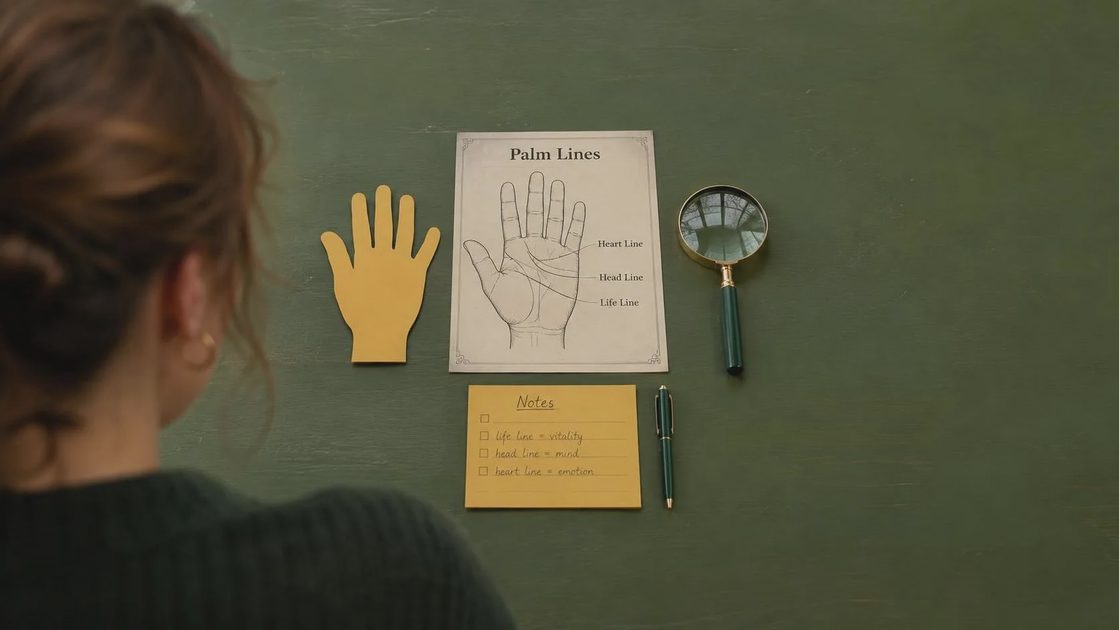
In palmistry, the heart line is often associated with emotional expression and relationships, while the head line is linked with thought, attention, and decision-making. When those lines appear joined, a one line palm is traditionally read as a closer blending of feeling and thinking. Some readers interpret that as focus, commitment, or a tendency to put the whole self behind a choice.
There are other plausible readings. The person may act decisively once something matters to them, or they may need time to separate what they feel from what they think. A reader might also notice that the same quality can be helpful in one setting and tiring in another. Deep concentration can support creative work, while difficulty shifting attention can make interruptions frustrating.
This is why I prefer language such as “you may notice” instead of “you will become.” Palmistry works best as a reflective prompt. Ask: When do I feel most focused? Do I decide from evidence, instinct, or a mixture? When a disagreement appears, do I explain my feelings clearly, retreat, or keep pushing until the issue is settled? Those questions are more useful than a fixed prediction.
How to read a one line palm yourself
Use a simple three-step process. First, photograph both palms in natural light with the fingers relaxed. Second, mark what you can actually see: one continuous crease, two lines touching briefly, or separate lines with a faint bridge. Third, compare the feature with the person’s lived habits before choosing a traditional interpretation.
For a one line palm, context matters especially when the line is not perfectly clear. A crease that looks single near the thumb side may divide under the middle fingers. A deep line on one hand may be faint on the other. Skin texture, age, repetitive work, and hydration can change the appearance of small creases, so avoid treating a phone photo as final evidence.
If you are reading a friend’s hand, ask permission first. Keep the conversation collaborative: “I notice the two lines seem joined here. Does the idea of combining emotion and analysis feel familiar?” That wording gives the other person control and prevents a playful reading from becoming an unwanted label.
One line palm and relationships
When couples or friends compare hands, the most interesting question is not who has the “stronger” pattern. It is how each person handles attention, conflict, and affection. Someone with a one line palm may appreciate direct communication because mixed signals create unnecessary work. Another person with the same feature may prefer quiet processing before discussing a difficult topic. The visible crease cannot settle that difference; conversation can.
A gentle reading can become an invitation to notice real behavior. Does one partner remember tiny details but struggle to switch off work? Does the other talk through feelings immediately? Neither habit is proof of a palm pattern, yet the symbolism can give people a friendly way to discuss them. Keep the tone curious, never diagnostic, and avoid statements about loyalty, mental health, or future events.
If the feature makes someone anxious, return to the concrete facts. A one line palm is a common enough variation in how creases form, and it is not a forecast of misfortune. No palm line can predict death, guarantee success, or replace medical guidance.
Choosing a gift inspired by the reading
The best gift is connected to the person, not just the symbolism. For a friend who loves journaling, try a sturdy pocket notebook in the $12 to $25 range and write a note about one question the reading raised. For a partner who enjoys jewelry, a simple engraved bracelet or ring can carry a short phrase such as “wholehearted and curious” without claiming that the palm controls their future. Handmade options on Etsy often allow initials, dates, or a private message.
A practical recipient may prefer a leather-bound planner, a quality pen, or a small desk object rather than a mystical charm. Someone who enjoys visual keepsakes might like a custom palm sketch, an archival print, or a framed photograph of their hand. Ask about metal allergies, favorite colors, and whether they enjoy spiritual language before ordering. A $20 gift chosen thoughtfully can feel more personal than a $100 item selected from a generic “palmistry” list.
Let the gift end with a story. Include a note explaining what you observed, what interpretation you found interesting, and one memory that made you think of the recipient. The object then becomes a record of a conversation rather than a claim about their destiny.
Questions to bring to a palm discussion
If you upload a photo or start a community thread, include both hands, clear lighting, and the question behind the reading. You might ask, “Does this line look fully joined or partly connected?” or “How do different traditions interpret a one line palm?” Add context about whether the hand is dominant and what you personally notice. A good response should distinguish visible details from symbolic possibilities.
Disagreement is normal. One reader may see strong focus, while another may emphasize emotional intensity. Compare the explanations, keep the parts that help you reflect, and leave the rest. Palmistry becomes more welcoming when readers can be interested without having to accept every interpretation.
The most useful takeaway is simple: look closely, speak tentatively, and connect the reading to an actual story. A one line palm may be an intriguing feature, but the person holding that hand is always more complicated and more interesting than the crease.