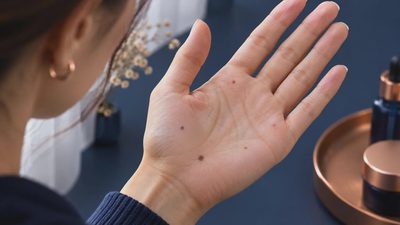

A straight line on palm can catch your attention because most palm lines look curved, broken, or gently uneven. You may notice a clean mark crossing the hand, running beneath the fingers, or extending through the center of the palm. Traditional palmistry gives these features symbolic meanings, but I like to begin with the visible detail rather than a dramatic prediction. Is the line deep or faint? Does it run alone, or does it connect with another major line? Here is what readers usually notice; now tell us what fits your real life.
Start with the line’s location
Palmistry usually names lines by their position and general direction. The heart line sits below the fingers and is commonly associated with emotional expression and close relationships. The head line runs across the middle of the palm and is traditionally linked with thinking, learning, and decision-making. The life line curves around the base of the thumb and is often read as a record of energy, habits, and engagement with life, not a timetable for death.
That location matters more than the word “straight.” A straight line under the fingers may be read differently from a straight line crossing the center of the hand. Some readers also look at the dominant hand for current choices and the non-dominant hand for inherited tendencies or early patterns. This is a tradition, not a scientific test, so use it as a prompt for reflection rather than a fixed description of your character.
If you are checking a photo, ask the person to hold the palm flat in soft daylight. Shadows can make a crease look deeper than it is, while dry skin can make smaller lines disappear. Compare both hands before settling on an interpretation.

What a straight line on palm may symbolize
A straight line on palm is often associated with directness, concentration, or a preference for clear choices. In an old-school reading, someone with a noticeably straight head line might be described as practical and organized. They may prefer instructions, schedules, and decisions based on observable details. That does not mean they lack imagination; it simply suggests that their thinking may become clearest when ideas have structure.
A straight heart line is sometimes connected with emotional restraint or a straightforward way of expressing affection. The person may show care through reliability, useful help, or honest conversation rather than theatrical declarations. Another reader might see the same feature as emotional steadiness. Both interpretations can be useful if they lead to a respectful question instead of a label.
A strong, straight fate line, when present, is traditionally associated with direction in work or responsibilities. Yet modern lives rarely follow one uninterrupted route. A person can change careers, take time away from work, or build a family business and still feel purposeful. The line should never be used to tell someone that success, failure, marriage, or hardship is guaranteed.
Look at depth, breaks, and nearby markings
Line quality adds context. A deep line may be easier to read, but it does not automatically mean a stronger destiny. A faint line can reflect lighting, skin texture, or the way the hand is held. A break may represent a transition in traditional symbolism, while a branch can suggest competing interests or a new direction. These are possibilities, not verdicts.
If a straight line on palm appears to merge with another line, note where the connection happens. A head line that begins close to the life line is sometimes interpreted as careful decision-making in early life. If it separates quickly, readers may describe more independence. A heart line that ends beneath the index finger can be read as idealistic, while one ending closer to the middle finger is sometimes associated with a more practical approach to relationships.
None of these signs can diagnose anxiety, predict an accident, or establish what another person feels. If a reading makes someone frightened, pause and return to ordinary evidence: what they have said, chosen, built, and experienced. Palmistry works best as a conversation starter.

A simple way to read it for yourself
Take five minutes and make three observations before interpreting anything. First, write down the line’s exact location and direction. Second, compare its depth and shape with the same area on the other hand. Third, note nearby lines without assigning meaning yet. This small pause prevents the familiar habit of finding one symbol online and forcing the entire reading to match it.
Next, choose two possible interpretations. For example, a straight heart line could suggest calm emotional expression, or it could simply reflect a palm crease that looks unusually clean in the photograph. Ask which description fits the person’s everyday behavior. Do they communicate clearly? Do they take time to trust people? Do they show affection through action? Their lived experience is more important than a textbook sentence.
For a friendly reading, share the observation gently: “I notice a fairly straight line beneath your fingers. Some palmistry traditions connect that with direct communication or steady emotions. Does either idea feel familiar?” That wording leaves room for agreement, disagreement, and a better story.
Matching a palm reading with a thoughtful gift
A symbolic gift should reflect the recipient, not just the line. If the reading centers on direct communication, consider a quality journal, a refillable pen, or a small desk card with a message you actually mean. A person who values structure might enjoy a dated planner, a leather bookmark, or a simple engraved key ring. For someone who expresses care through practical help, choose something useful: a travel mug, a compact tool, or a photo book organized around shared memories.
Budget does not determine meaning. A handwritten note and a printed palm photo can feel more personal than a $100 novelty item. If you do want a handmade piece, look for a seller who explains materials, dimensions, production time, and personalization clearly. A small palm-inspired pendant or line-art print can work beautifully when the design stays subtle rather than claiming to reveal a person’s fate.
The best gift story connects the observation to a real moment: “This reminded me of how clearly you helped me make that decision,” or “I chose this because you always turn complicated plans into simple steps.” The symbolism opens the door; the memory makes the gift yours.
Keep the reading curious, not conclusive
A straight line on palm is interesting because it invites several readings at once. It may encourage a conversation about logic, emotional expression, responsibility, or personal direction. It cannot replace medical advice, relationship communication, financial planning, or a person’s own judgment. Treat traditional palmistry as a reflective language, especially when reading a friend’s hand.
Before you finish, ask an open question: “Where in your life do you feel most direct right now?” The answer may have more insight than any chart. Then, if you are choosing a gift, follow that answer toward something useful, personal, and easy to explain. A good reading ends with a question, and a good gift ends with a story.