A palm reading split life line can look dramatic, especially when you first notice a fork, gap, or second track near the base of your thumb. Before anxiety takes over, take a breath and look again in good light. Palmistry is a reflective tradition, not a medical test or fixed forecast. The useful question is not, What terrible thing will happen? It is, What changes, choices, or patterns does this mark remind me to consider?
Start with the line in front of you
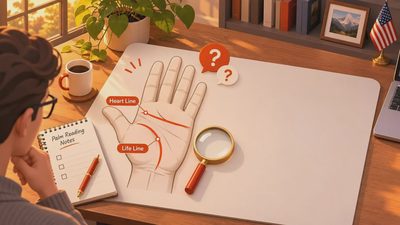
The life line usually curves around the fleshy mount beneath the thumb, beginning between the thumb and index finger and traveling toward the wrist. Despite its name, traditional palm readers do not reliably treat its length as a countdown or a measure of health. They often read it as a symbol of vitality, daily rhythms, rootedness, and the way someone moves through major transitions.
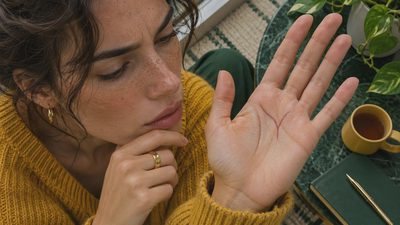
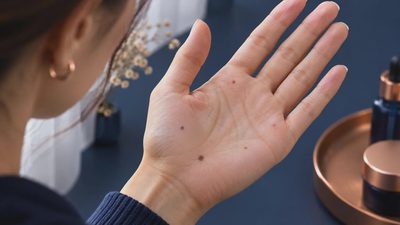
For a palm reading split life line, first identify whether you are seeing a true division or simply a fine neighboring line. A true fork tends to separate clearly for a noticeable distance. A light parallel crease can be a support line, a skin fold, or a feature that appears more visible when the hand is dry. Compare both hands, rotate the wrist, and take a clear photograph with the fingers relaxed. Pressing hard on the palm can create temporary creases that are easy to mistake for permanent markings.
The hand you use most often may show how you currently express yourself, while the other hand is sometimes read as an underlying tendency. Different schools disagree about this distinction, so treat it as a prompt for conversation rather than a rule. What was happening in your life when the line became easier to see? That real-world detail matters more than a dramatic label.
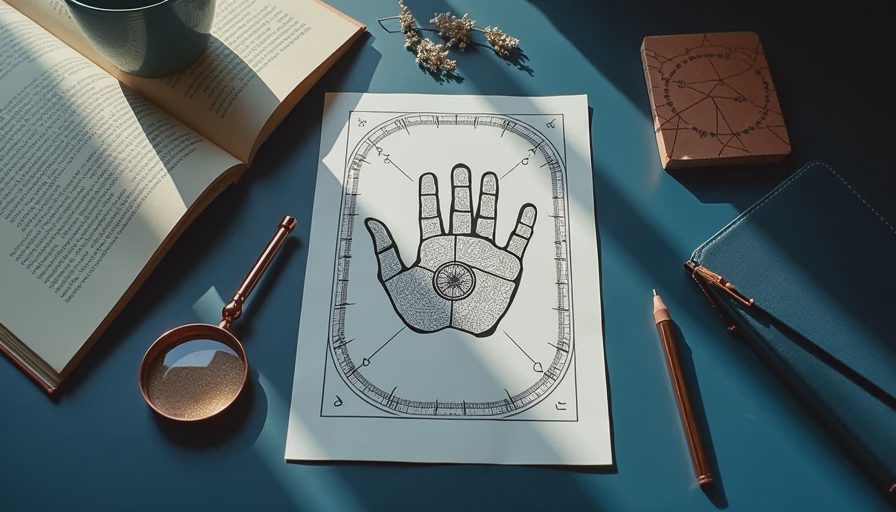
What a fork traditionally suggests
In a traditional palm reading split life line interpretation, an outward branch can be associated with travel, relocation, independence, or a desire to experience life beyond familiar routines. If the branch points toward the outer edge of the palm, some readers connect it with curiosity and new surroundings. A branch that stays close to the thumb may be interpreted as a change that still preserves family ties, home comforts, or familiar responsibilities.
The size and direction of the branch matter, but so does the rest of the palm. A deep, clear life line with a small outward fork might describe a person who builds a stable base before taking a calculated leap. Several fine branches could suggest many interests or periods of restlessness. These are possibilities, not verdicts. Ask whether the description resembles a move, a career pivot, a long trip, or simply the wish to make more room for yourself.
A split near the upper section may be connected by readers with earlier adult choices, while a split closer to the wrist is often discussed as a later-life transition. That timing is symbolic and flexible. It should never be used to predict death, illness, or a specific event.
Split, broken, chained, or doubled?
Not every unusual mark means the same thing. A break is a visible interruption in the main crease, although a faint continuation may cross the gap. Traditional readers sometimes associate a break with a reset, a demanding season, or a change in identity. A fork has two paths leaving one line. A doubled life line shows a second line running alongside the main curve and is often described as extra support, resilience, or a strong outside influence.
A chained section looks like a sequence of small linked ovals rather than one clean groove. Readers may connect it with fluctuating energy or a complicated routine, but skin texture, lighting, and hand movement can produce this appearance. The mount of Venus, the padded area inside the life line, also changes the overall reading. A broad, warm-looking mount is traditionally linked with sociability and affection; a flatter one may be read as reserved or economical with energy.
In practical terms, photograph your palm at the same angle on two different days. If the apparent break disappears when your hand relaxes, it may be a normal crease or lighting effect. A palm reading split life line is worth discussing, not fearing.

A grounded way to read your own palm
Begin with observation. Write down where the line starts, how deeply it is etched, whether the split points inward or outward, and whether both hands show something similar. Then add context: Are you considering a move? Have you changed jobs? Are you rebuilding a routine after parenting, school, or a long project? These questions turn a symbolic feature into a useful journal prompt.
Next, compare interpretations without forcing a match. One reader might see an outward fork as travel, while another sees independence. Both can be useful if they help you name a real desire. If a reading makes you feel trapped or frightened, set it aside. No crease has authority over your decisions, and palmistry should not replace medical, financial, or mental health guidance.
When sharing a palm photo online, crop out identifying details, use natural window light, and avoid filters. Include both palms if you want thoughtful comparison. A clear image invites better discussion than a blurry close-up with a dramatic caption.
Matching the reading with a thoughtful gift
A palmistry conversation becomes more memorable when the gift reflects the person rather than a generic mystical theme. For someone drawn to travel, consider a compact leather passport cover, a $20 to $40 travel journal, or a small map print connected to a meaningful place. If the split suggests a season of independence, a personalized key dish, engraved bracelet, or sturdy notebook can honor a new apartment, job, or creative project.
For a parent or partner, choose an object that carries a shared story: a framed route from a favorite road trip, a photo book of a move you made together, or a ceramic mug from a local maker. A gift does not need to claim that the palm predicted anything. It can simply say, I see the transition you are making, and I am cheering for you.
The best palm reading split life line gift combines symbolism with daily use. Start with the recipient's habits and budget, then add the palm detail as a quiet layer of meaning. A $15 handwritten journal can feel more personal than an expensive crystal chosen without thought.
Questions to bring to a palm discussion
If you are posting a palm reading split life line, describe what you see without announcing the conclusion. Ask whether others notice a fork, a parallel line, or a temporary crease. Mention which hand is dominant and whether the feature appears in both palms. You can also ask, What traditional interpretations fit a person preparing for a move? That wording leaves room for several perspectives.
Keep the discussion kind and specific. A helpful response points to the location and shape of the mark, explains the traditional association, and then returns the choice to the person holding the hand. The line can start a story; it cannot write the ending.
So look closely, stay curious, and connect the symbol to real life. Is your fork inviting you to explore, protect your roots, or simply notice a change already underway?