
When you notice your life line and head line connected near the thumb and index finger, it can look more dramatic than it is. Palmistry has several traditional ways to interpret this feature, but none of them should be treated as a fixed prediction about your future. A palm is a changing, personal landscape, and the most useful reading starts with what you can actually observe.
What the connected lines look like
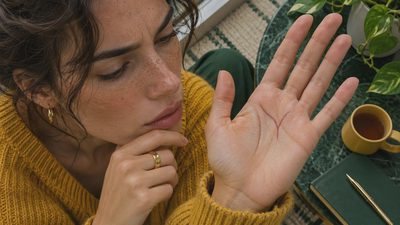
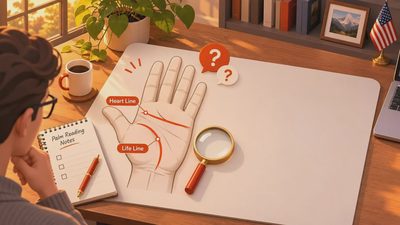
First, find the life line: it usually curves around the fleshy mount beneath the thumb. The head line often begins nearby and travels across the palm, sometimes toward the outer edge. If the two lines share a starting point for a short or noticeable distance, readers may describe the life line and head line connected.
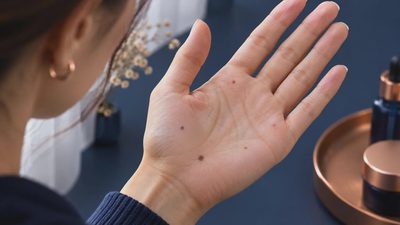
Look closely before assigning meaning. Are the lines joined only at their first few millimeters, or do they travel together farther across the palm? Is the connection clean and deep, or is it made up of fine lines that overlap? A clear photograph in natural light can help, especially if the skin is dry or the palm has many small creases.
The dominant hand can also matter in a traditional reading. Many readers compare both hands, using one to discuss inherited tendencies and the other to explore habits shaped by experience. That is a symbolic framework, not a scientific measurement, so treat it as a prompt for reflection rather than a test result.

Traditional meanings of a life line and head line connected
In older palmistry traditions, the life line and head line connected is often associated with caution, careful decision-making, or a strong need to feel secure before acting. A person with this pattern may be described as someone who watches the room, considers consequences, and takes time to trust a new situation. Those descriptions can feel familiar without being universal.
Some readers interpret a longer connection as a sign of a more reserved or deliberate approach during early life. Others focus on the quality of the head line after it separates. A straight continuation may be read as practical thinking, while a line that slopes toward the lunar mount may be associated with imagination. These are traditional symbols, not personality diagnoses.
There is also a more generous interpretation: the connected lines may suggest that your thinking and sense of personal safety work closely together. Before making a major change, you might ask, “Will this support the life I am actually building?” That question can be useful whether or not you believe palm lines carry meaning.
The length of the connection matters to readers
A short connection is common and is usually read differently from a long one. When the lines separate quickly, palmists may see a brief period of caution followed by independent thinking. When they remain joined for a longer stretch, the traditional reading often emphasizes careful transitions and a preference for familiar ground.
The texture matters too. A deep, even line is easier to identify than a collection of small crossing marks. Breaks, islands, branches, and nearby influence lines can change the way someone describes the pattern. This is why a single label rarely tells the whole story. A clear reading should mention the line’s direction, depth, color, and relationship to other major lines.
Try comparing your palm with a friend’s without ranking either hand as better. You may notice that one person begins decisions with instinct while another gathers information first. The point is not to prove that the palm caused the behavior. It is to see whether the traditional language gives you a useful way to discuss something already present in daily life.
What this feature does not predict
A life line and head line connected does not predict a short life, an accident, a mental health condition, or an unavoidable hardship. Palmistry cannot reliably determine medical outcomes, lifespan, or a person’s moral character. If a social media post gives you a frightening interpretation, pause before accepting it as fact.
The same caution applies to relationship readings. A connected starting point does not mean someone is dependent, difficult, or destined to repeat family patterns. Two people can have similar markings and completely different lives because choices, resources, culture, health, and circumstances shape behavior far more powerfully than a crease in the hand.
A grounded approach is to separate observation from interpretation. Say, “The lines share a starting point,” before saying, “This may reflect a careful decision style.” Then ask whether that description fits your real experience. If it does not, set it aside. A palm reading should create curiosity, not anxiety.

How to read both hands without overthinking
Start with a relaxed palm rather than a tightly stretched hand. Use soft daylight, clean hands, and a photo taken from directly above. Identify the three major lines, then note where the head line leaves the life line. Do not trace every tiny crease on your first attempt; too much detail can make a simple pattern seem confusing.
Next, compare the left and right hands if you are comfortable doing so. Ask whether the connection appears on both palms, whether one side is clearer, and whether the head line changes direction after separating. Write down what you see in plain language. For example: “The lines touch for about one inch, then the head line travels almost straight across the palm.”
Now connect the symbol to a real question. Are you deciding whether to move, change jobs, start a relationship, or set a boundary? The traditional meaning may help you notice your preference for planning or reassurance, but it should not make the decision for you. Practical evidence still belongs in the conversation.
Turning a palm reading into a meaningful gift
If you are reading someone else’s palm, a gift inspired by the life line and head line connected can be personal without being overly mystical. A small leather journal works for someone who processes choices by writing. A soft desk lamp suits a friend who enjoys late-night sketching, reading, or studying. A simple engraved keychain can carry a private phrase such as “take the next thoughtful step.”
Match the present to the person before matching it to the symbolism. A minimalist may prefer a slim brass bookmark over a crystal display. A practical parent may appreciate a framed palm photograph with a short handwritten note rather than an expensive novelty item. For a budget around $15 to $30, consider a notebook, tea blend, or small art print. From $40 to $80, look at a custom illustration, quality journal, or handmade keepsake box.
The best gift story explains why you chose it. You might write, “Your palm made me think of how carefully you make big decisions, so I found something for your next season of planning.” That keeps the reading warm and open-ended instead of presenting it as a verdict.
A final way to hold the meaning
The life line and head line connected is best understood as an invitation to notice how thought and security interact. Traditional palmistry may call attention to caution, concentration, or a measured beginning, while your lived experience supplies the meaning that matters most.
Take a clear look, compare both hands, and stay curious about the details. If the pattern resonates, use it as a conversation starter with a friend or partner. If it does not, you lose nothing by letting it go. The most generous palm reading leaves room for change, and the most thoughtful gift reflects a real person rather than a prediction.
What does your connection look like when you relax your hand, and does the traditional description fit the way you approach an important decision?