Seeing a short life line palm can be surprisingly unsettling, especially when a quick search turns an ordinary crease into a dramatic prediction. Let’s slow that moment down. In traditional palmistry, the life line is read around the base of the thumb, curving from between the thumb and index finger toward the wrist. Its length is not a reliable clock, and it does not tell you how long someone will live. Here is what readers usually notice; now let’s ask what fits the person’s real life.
Where the life line is and what readers inspect
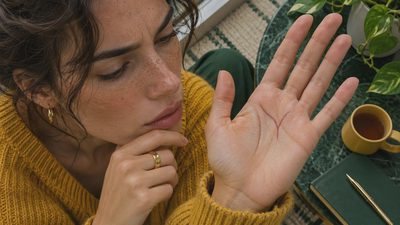
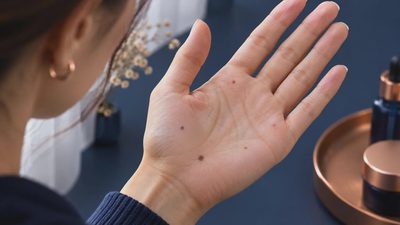
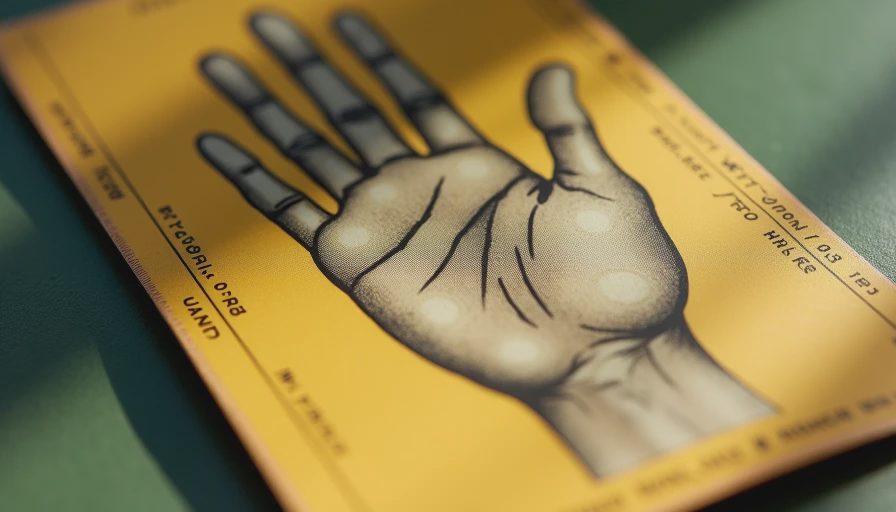
The life line is usually the curved line that frames the fleshy area below the thumb. Some hands show a bold, deep arc. Others have a fine line, a broken-looking line, a chain of small marks, or a curve that seems to fade before reaching the wrist. Lighting, dry skin, age, and the way a hand is held can all change what you see in a photograph.
When I look at a short life line palm, I first compare both hands rather than judging one feature in isolation. The dominant hand is often associated with current choices and habits in modern palmistry, while the non-dominant hand is sometimes read as an earlier pattern or natural tendency. These are interpretive traditions, not medical measurements. A clear photo of both open hands, taken in soft daylight, is more useful than a blurry close-up.
Readers also inspect the line’s depth, color, nearby markings, and the shape of the mount of Venus, the padded area beneath the thumb. A shorter line paired with a wide, firm mount may be interpreted differently from a faint line on a tense-looking hand. The observation comes first; the story comes second.
What a short life line palm traditionally suggests
Traditional palmistry often connects the life line with vitality, stamina, routines, physical engagement, and a person’s relationship with change. A short line can therefore suggest that energy is expressed in a focused way rather than spread across every activity. One reader may see someone who prefers a smaller circle and carefully chosen commitments. Another may associate it with a person who needs regular rest, quiet, and recovery after busy periods.
A short life line palm is not automatically a sign of weak health, bad luck, or a shortened life. That claim belongs to fear-based fortune telling, not a grounded reading. The same line can appear on hands belonging to active, healthy people with very different personalities. Palmistry can offer a reflective prompt, but it cannot diagnose illness, replace professional care, or establish a lifespan.
The most useful question is not, “How long will I live?” Try asking, “What helps me feel steady and energized?” The answer might be walking before work, protecting a weekend afternoon, eating regular meals, or saying no to an overloaded schedule. That turns an alarming symbol into something practical.
Short life line palm versus a faint or broken line
Length is only one feature. A line can look short because it is faint, because another crease crosses it, or because the photograph cuts off the lower palm. A broken appearance may also come from normal skin texture. Before interpreting anything, rotate the hand slightly, use indirect light, and compare a recent photo with the actual palm.
Some palmistry traditions treat a faint life line as changing energy or sensitivity, while a deep line is linked with stronger outward drive. A break may be read as a transition, relocation, illness recovery, career shift, or change in identity, depending on the surrounding markings. These are possibilities, not fixed outcomes. A reader should offer more than one plausible interpretation and let the person decide what, if anything, feels familiar.
This is where a community reading can help. Post both hands, mention which hand you use for writing, and describe a recent period of change without sharing private medical details. Good readers explain what they can observe and clearly separate that observation from symbolism.
How to read the line without spiraling
Start with a simple three-step process. First, describe the physical feature without interpretation: “The line curves widely, appears lighter in the middle, and ends above the wrist.” Second, compare it with the other hand and the surrounding lines. Third, connect the symbolism to a real-life question rather than a prediction.
For example, a short life line palm might prompt a discussion about boundaries. Does the person agree to too many plans, then need several days alone? Do they enjoy intense projects but dislike constant interruptions? Do they feel most restored by nature, music, cooking, or time with one trusted friend? Those answers create a more personal reading than a generic statement about fate.
If a palm photo makes you anxious, step away from the interpretation. Palm lines change in appearance, and anxiety can make any ambiguous mark feel urgent. Talk with a qualified health professional about health concerns, not with a palm reader. The kindest reading leaves someone more curious and grounded, never frightened.
Turning a palm reading into a meaningful gift
A palm-inspired gift works best when it reflects the recipient’s actual habits. For someone who values quiet routines, consider a ceramic tea cup, a soft reading light, or a small notebook for tracking ideas. For a friend who loves jewelry, a simple hand-shaped pendant or engraved bracelet can reference the reading without claiming that the piece controls destiny. A practical budget of $20 to $45 can cover a thoughtful notebook, candle, or handmade mug; around $60 to $120 opens more options for custom jewelry or a framed palm illustration.
If the reading centers on a short life line palm and the recipient has been thinking about balance, add a handwritten note such as, “For the energy you protect and the life you choose to fill.” Avoid wording about danger, limited time, or unavoidable events. The gift should honor a conversation, not reinforce fear.
Before buying, ask what they actually use. A minimalist may prefer a small silver charm over a large mystical display. A parent might enjoy a framed family handprint design. A creative friend could appreciate a custom illustration based on the curve of their palm. Start with the person, then let the symbolism decorate the story.
A grounded reading to carry forward
The best interpretation of a short life line palm is neither dismissal nor doom. It is an invitation to look carefully, compare details, and notice how the symbolism connects with lived experience. The line may be short, faint, or simply difficult to photograph; none of those observations can predict death or guarantee health outcomes.
Read generously. Say what is visible, offer two or three traditional possibilities, and leave room for the person to disagree. Then turn the conversation toward something useful: rest, boundaries, creativity, or a gift that captures a shared memory. A palm reading should end with a question, not a sentence. What part of your current routine gives your energy back, and what small gift would remind you to make room for it?