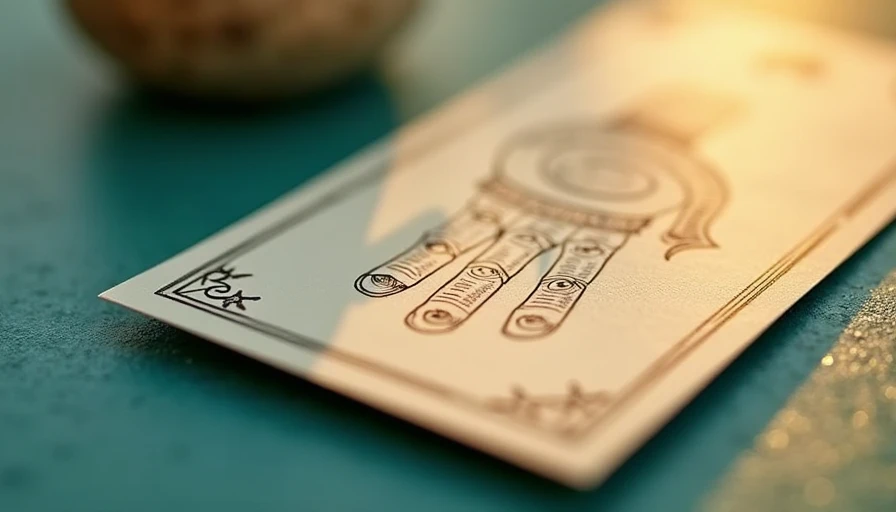
If you searched for life line reading palm, you are probably looking at the curved line that sweeps around the base of your thumb and wondering whether its length predicts how long you will live. Here is the reassuring answer: traditional palmistry does not have to be read as a countdown. A palm is better treated as a reflective map of energy, habits, change, and the way someone moves through life.
In a life line reading palm session, readers usually begin with what is visible before adding symbolism. Is the line deep or faint? Does it make a broad arc, or does it stay close to the thumb? Are there branches, crossings, islands, or breaks? These details create a conversation, not a fixed sentence. Now look at your own hand and notice one feature that stands out before reading any interpretation.
Where to Find the Life Line
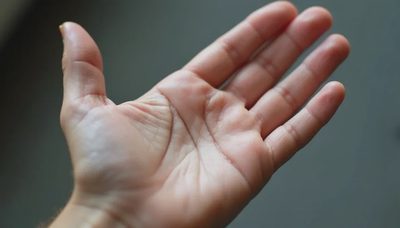
The life line begins between the thumb and index finger, then curves downward around the fleshy pad beneath the thumb, known as the Mount of Venus. It usually travels toward the wrist, although every hand has its own pattern. Some lines are bold and easy to follow. Others are thin, fragmented, or joined by small supporting marks.
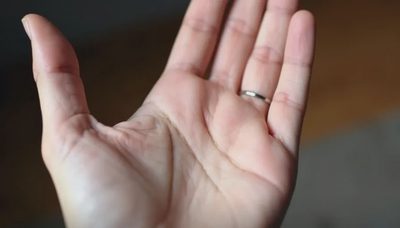
For a clearer life line reading palm, use natural daylight and a relaxed hand. Do not stretch your fingers hard or press into the skin, because tension can make ordinary creases look deeper. A phone photo can help you compare both hands, but use a sharp image taken from directly above. The dominant hand is often read as the way a person is expressing themselves now, while the other hand is traditionally linked with inherited tendencies or earlier patterns. Readers disagree about this, so treat it as a useful comparison rather than a rule.
Length is the feature beginners notice first, but it is not traditionally a reliable measure of lifespan. A short life line can belong to a lively, adventurous person, while a long line can belong to someone who prefers a quiet routine. In a grounded life line reading palm, vitality is discussed through the line's quality, its relationship to other markings, and the person's actual experiences.
What Depth, Shape, and Distance Can Suggest
A deep, clean line is often associated with steady reserves, persistence, or a strong connection to physical routines. That does not mean the person is always energetic. It may simply suggest that structure, sleep, movement, or familiar surroundings help them feel centered.
A faint line can be read in several ways. Some palmists associate it with sensitivity, changing priorities, or energy that comes in waves. Others see a faint crease as a normal skin feature with little symbolic weight. This is where a good life line reading palm avoids dramatic claims and asks a practical question: do you actually feel restored by solitude, exercise, social time, creative work, or a predictable schedule?
The shape matters too. A broad arc reaching well away from the thumb is traditionally linked with curiosity, openness, and a willingness to explore. A line that hugs the thumb is sometimes associated with caution, family focus, or conserving energy. Neither pattern is better. One person may love weekend road trips; another may feel happiest hosting dinner at home. The interpretation should fit the whole person, not override them.
Small branches rising from the line are often read as moments of ambition, optimism, or renewed effort. Downward branches may suggest periods when responsibilities felt draining. These are possibilities, not diagnoses. Look for a matching chapter in real life: a move, a new job, a caregiving season, or simply a year when your priorities changed.
Breaks, Islands, and Crossings Without the Doom
Breaks attract attention because they look dramatic. In older palmistry traditions, a break can symbolize transition, a change in identity, or a period of disruption. It does not predict death, illness, or unavoidable misfortune. Skin creases can appear interrupted because of angle, dryness, overlapping lines, or the way a hand bends.
An island, which looks like a small oval along the line, is sometimes connected with a stretched-out period of stress or uncertainty. A crossing line may be read as an outside influence, such as work pressure or family obligations. Before accepting either idea, compare the mark on both hands and inspect it in different lighting. If it disappears when the hand relaxes, it may simply be a shallow crease.
This is the part of life line reading palm that benefits most from a gentle tone. If a mark makes you anxious, pause the reading. Palmistry should give you language for reflection, not a reason to fear your future. A useful interpretation might be, “This section reminds me of a demanding transition,” rather than, “Something terrible will happen.”

Reading Both Hands Together
Rather than choosing one hand as the only truth, place both palms side by side. Compare the starting points, the width of the arcs, and any branches that appear more strongly on one side. Similar lines may suggest a long-standing pattern. Noticeable differences can become prompts for thinking about growth, adaptation, or the gap between private instincts and public behavior.
For example, one hand might show a life line that stays close to the thumb, while the other opens into a wider curve. A traditional reading could describe a person who once valued safety but has gradually become more independent. Another reader might see nothing more than natural variation. Both views can coexist, and the person's story remains the strongest evidence.
When sharing a photo in a community, crop out unrelated personal information and use clear lighting. Ask readers to describe what they observe before they interpret it. “There is a small branch near the middle” is more useful than “This proves a major event.” That habit keeps the discussion curious and respectful.
Turning a Reading Into a Meaningful Gift
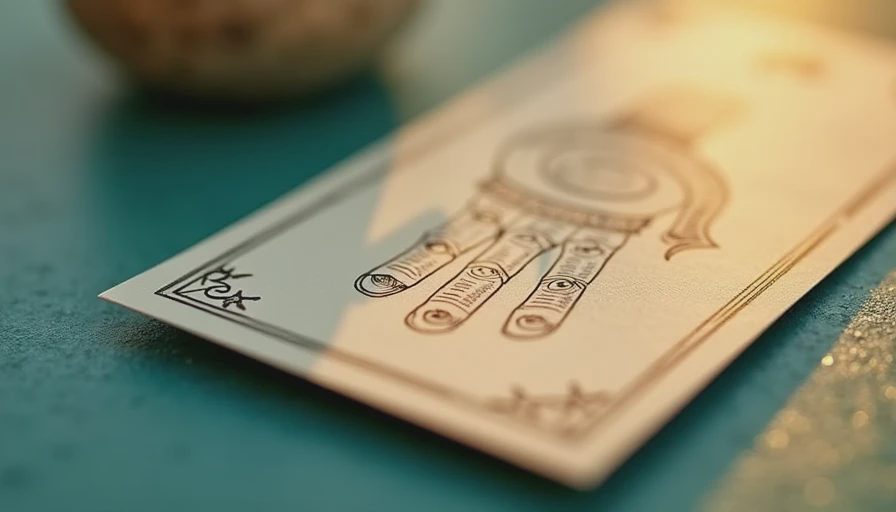
A palm reading becomes especially memorable when it leads to a gift connected to the recipient's real life. Start with their habits, not a generic mystical object. Someone who journals might enjoy a quality notebook with a simple hand-drawn palm illustration. A friend who loves jewelry may prefer a subtle bracelet or engraved pendant featuring a curved line, rather than a loud fortune-telling symbol.
For a life line reading palm gift, choose the story before the product. You might write, “I noticed how your line makes a wide arc, and it reminded me of the way you always make room for new places and people.” That note gives a $15 journal, a $30 print, or a $60 handmade accessory emotional meaning without pretending the object controls the future.
Budget matters less than attention. A printed palm sketch, a small photo frame, or a handwritten card can feel more personal than an expensive item chosen in a hurry. Ask yourself what the person actually uses, wears, or keeps nearby. The best gift says, “I notice your way of moving through the world.”
A Simple Reading Checklist
For your next life line reading palm, follow this order:
- Photograph both relaxed hands in good light.
- Trace the line from its starting point to the wrist.
- Describe depth, width, arc, branches, and interruptions without interpreting yet.
- Compare the dominant and nondominant hands.
- Connect possible meanings to real experiences, not predictions.
- Write down one question the reading raises about your habits or changes.
- If you are giving a gift, match the recipient's daily life and budget before choosing symbolism.
The most useful palm reading leaves room for disagreement. You can enjoy the tradition while staying grounded in observation, memory, and choice. Your hand may offer an interesting story, but you are still the person writing what comes next.