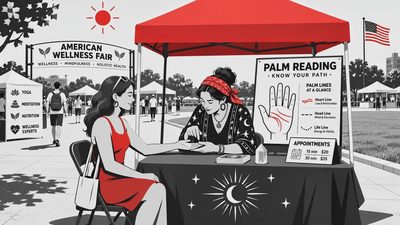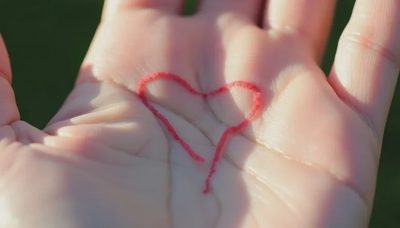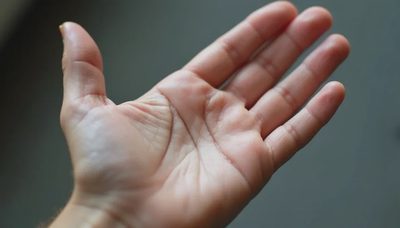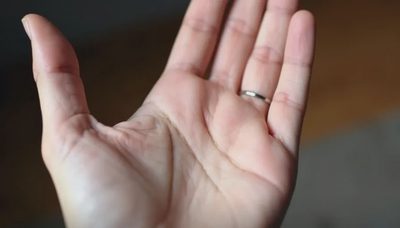

Turn your hand sideways and look at the outer edge below your little finger. In palm reading number of children is traditionally associated with tiny vertical marks in this area, often called child lines. Some readers count the marks as potential children or meaningful caregiving bonds. They cannot reliably predict how many children you will have, whether you can conceive, or what your family will look like. Think of the count as a conversation starter, not a forecast.
Where to find child lines
Start with your palm facing you and your fingers relaxed. Find the little finger, then move down to the padded outer edge of the palm beneath it. You may see one or more short, roughly horizontal creases between the base of the finger and the heart line, the major crease running across the upper palm. In palmistry, those shorter horizontal marks are often called relationship or union lines.
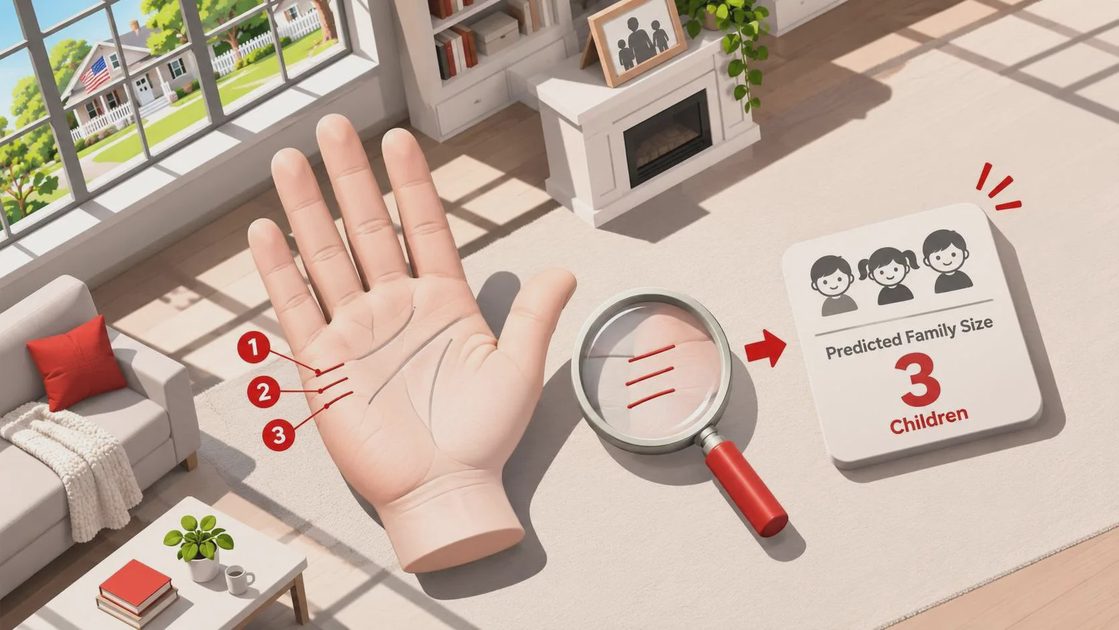
Child lines are commonly described as finer, upright marks rising from or crossing a relationship line. They can be faint enough to disappear when you change the angle of your hand. Some palmistry traditions use different locations or methods, so two readers may not agree on which marks count.
For a clearer look, use soft, even light and turn your hand slightly rather than pressing hard on the skin. A phone photo taken from the side can help you study the edge, but zooming in too far can make ordinary skin texture look more significant than it is. Relax your hand between glances; a clenched palm creates extra folds.
Try describing what you see before interpreting it: “There are two fine vertical marks near one horizontal crease,” for example. That simple observation leaves room for another reader to see the same marks differently.

What the count traditionally means
In a palm reading number of children may be interpreted by counting distinct vertical lines in that area. One tradition treats each clear mark as a potential child. A broader, more reflective interpretation includes children you help raise, close relationships with younger people, or a wish to nurture. These are interpretations within palmistry, not evidence that a particular event will happen.
There is no universal rule for deciding which tiny mark qualifies. A reader might count only lines that touch a relationship line; another might include nearby upright marks. Fine crosshatching, dry skin, and the angle of the hand can all make a count feel less certain. If you see three marks, it is perfectly reasonable to say “I see three possible lines” rather than “I will have three children.”
Some readings also assign meaning to a line’s depth or length. A prominent line may be described as a strong connection, while a faint one may be read as a quieter influence. Those descriptions are symbolic, not measurements of a child’s health, personality, or importance. I would leave any interpretation that ranks family members at the door.
Which hand should you read?
Many palm readers compare both hands. A common approach treats the dominant hand as reflecting present choices and lived experience, and the nondominant hand as reflecting inherited tendencies or potential. Other readers reverse those associations or use another system altogether. There is no scientific basis for choosing one hand as a more accurate predictor.
Look at each hand separately first, noting the location and number of marks without trying to make them match. Then compare. If you notice one line on one hand and several on the other, that does not mean children are destined to appear or disappear. It may simply reflect differences in creases, lighting, or how you are holding your hands.
If comparing hands feels fun, ask what the difference brings up for you: Are you thinking about the family you grew up with, the one you have now, or the ways you care for people outside your household? You do not need an answer that fits a counting rule.
What if you see no lines, a fork, or very faint marks?
No visible child lines do not mean you cannot have children or that you will not be a parent. Some hands have fewer visible fine creases in this area, and a photo may miss marks that appear in person. In the same way, a faint line is not a warning about a pregnancy or a child.
A forked mark is sometimes interpreted as twins, but there is no reliable way to determine a multiple pregnancy from a palm. Overlapping creases can create a fork-like shape, and readers differ on whether to count it as one mark or two. Treat both descriptions as possibilities within the tradition, not predictions.
If you are looking at a palm photo someone shared, ask permission before saving or reposting it. A close-up of the little-finger edge plus a relaxed view of the whole palm gives other readers useful context. It is also fine to share a description instead of an image. You can keep family plans, fertility experiences, and relationships private.
Keep the reading gentle and useful
Family can be a tender subject. Before reading someone else’s hand, ask whether they want to discuss children at all. If they do, offer the observation first and let them decide whether the traditional symbolism resonates. “I notice a couple of fine marks here; some readers associate them with nurturing relationships” gives the other person room to respond without being boxed into a prediction.
Palm lines cannot answer medical questions about fertility or pregnancy. For those, a qualified health care professional is the right person to consult. And if this particular tradition brings up anxiety or grief, you can skip it entirely; there is no requirement to turn every crease into a message.
If you are sharing your own reading, what do you notice near the edge of your hand, and does the idea of nurturing describe any relationship in your life right now?