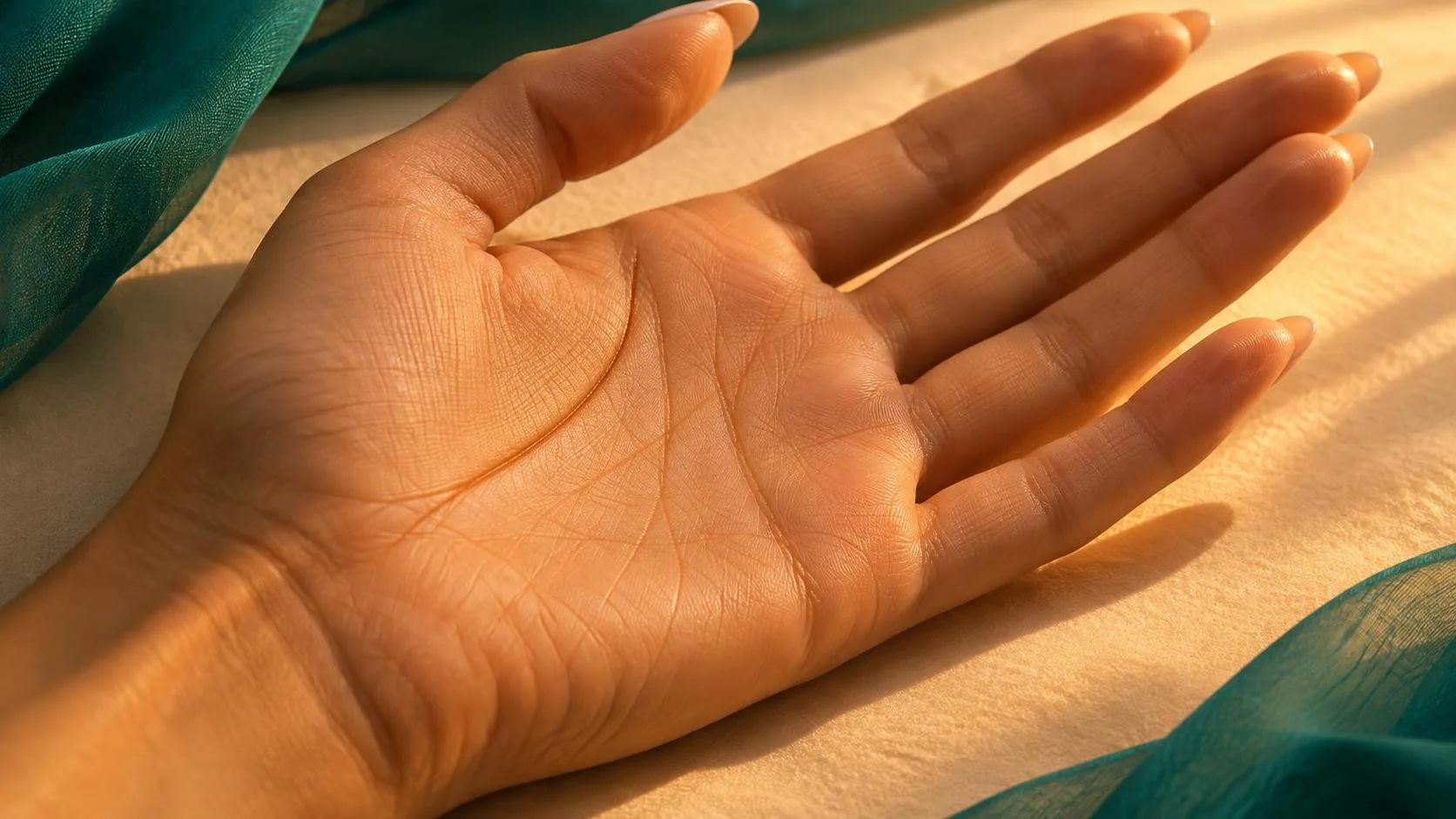
When someone searches for life line in hand for female, they are often looking at a curved line around the base of the thumb and wondering what it says about energy, change, or the years ahead. In palmistry, this line is traditionally read as a symbol of vitality and life experience, not as a calendar or a prediction of death. Here is what readers usually notice; now ask yourself which details resemble your real life.
Finding the life line on your palm
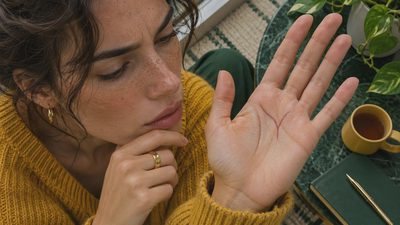
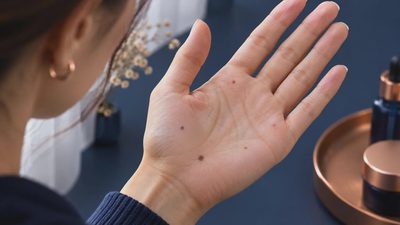
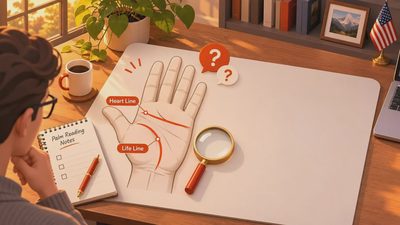
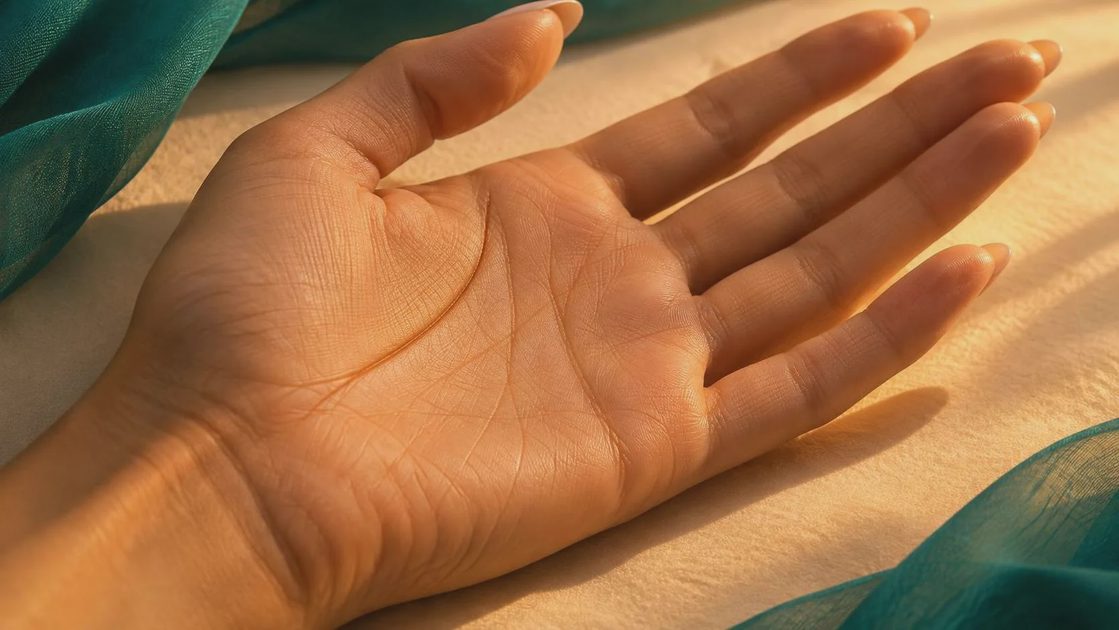
Open your dominant hand under a bright window and relax your fingers. The life line usually begins between the thumb and index finger, then sweeps in an arc around the fleshy mound below the thumb. It may be deep, faint, wide, narrow, chained, broken-looking, or crossed by smaller lines. Skin texture, dryness, lighting, and the way you hold your hand can change its appearance, so compare both hands before interpreting anything.
Traditional readers often begin with the line's shape rather than its length. A clear, even curve is associated with steady reserves and an ability to recover from ordinary setbacks. A line that hugs the thumb is sometimes read as a more contained approach to comfort, home, or personal boundaries. A broad arc is traditionally linked with curiosity, movement, and a willingness to make room for new experiences. These are symbolic observations, not medical conclusions.
The phrase life line in hand for female does not point to a separate biological rule in mainstream palmistry. Some readers use gendered language because older books were organized around men and women, but a better modern approach is to read the actual hand in front of you. A woman with a short-looking line is not doomed to a short life, and a woman with a strong line is not guaranteed endless energy. Palmistry works best as a prompt for reflection.
What line length and depth traditionally suggest
A common beginner question is whether a long life line means a longer life. In traditional readings, length is usually connected more with the range of lived experience or the way a person approaches change than with an exact lifespan. A short line can belong to an active, resilient person, while a long line can belong to someone who prefers familiar routines. The surrounding mounts and other lines provide context.
Depth is another feature readers discuss. A deeply etched line may be interpreted as strong focus, physical confidence, or a direct way of moving through daily responsibilities. A fine line can suggest sensitivity, fluctuating attention, or a person who responds strongly to their environment. None of these readings should replace rest, professional health care, or practical planning. They are simply traditional vocabulary for asking how you feel in your own body and routine.
If the line appears to fade and return, consider when you notice the change. It could be a natural variation in the skin, a crease viewed from a different angle, or a meaningful symbol in a personal reading. Rather than announcing that a break predicts disaster, a grounded reader might ask whether the person experienced a move, career shift, relationship change, or new responsibility. The story matters more than the crease alone.
Reading breaks, branches, and markings without fear
Breaks attract attention because they look dramatic. In palmistry, they are often associated with transitions, interruptions, or a period of rebuilding. The interpretation depends on whether the line continues nearby, whether another line supports it, and whether the mark appears on both hands. A small crossing line may simply reflect ordinary palm structure. A branch moving upward is traditionally read as ambition or renewed momentum, while a branch moving outward can represent exploration.
For life line in hand for female readings, the most useful question is not, “Will something terrible happen?” Try asking, “Where have I had to adapt, and what helped me regain balance?” That wording keeps the reading connected to observable experience. It also leaves room for disagreement. Two thoughtful readers can see the same branch and offer different possibilities without either one needing to claim certainty.
Look at the head line, heart line, and mounts as supporting details, but do not turn the palm into a rigid formula. A palm is not a diagnosis, legal document, or promise. If a marking makes you anxious, step away from the interpretation and return to concrete actions: schedule an appointment if you have a health concern, review your budget if you feel uncertain, or talk with someone you trust.

Comparing both hands
Many palmists compare the non-dominant and dominant hands. The non-dominant hand is sometimes described as inherited potential or an inner pattern, while the dominant hand is read as the way choices and experiences have shaped current expression. This distinction is not universal, and hand preference is more complicated than simply writing with the right hand. Still, comparing both palms can reveal useful visual differences.
Place the hands side by side and note whether the arcs begin at a similar point, whether one line is darker, and whether the curve opens more widely on one hand. Write observations before adding meaning. For example, “the right line is deeper near the thumb” is an observation; “I became more confident after changing jobs” is a personal interpretation. Keeping those steps separate makes the exercise more honest and much easier to discuss with a friend.
A simple photo can help. Use indirect daylight, keep the palm relaxed, and take one image from above rather than stretching the fingers. Avoid posting identifying information with the image. In a community reading, members can describe what they see while you decide what, if anything, feels relevant.
Choosing a symbolic gift from the reading
A palm reading can become a thoughtful gift when the present reflects the recipient's real habits rather than a mystical label. For someone who enjoys jewelry, consider a simple bracelet or pendant with a curved engraving inspired by the life line. A notebook works well for a person who likes tracking goals, moves, or family stories. A framed palm sketch can feel personal without claiming to predict the future.
The best choice depends on your relationship and budget. A handmade card with a photograph and a short note can be more meaningful than a $150 accessory chosen in a hurry. If you are buying for a partner, include a memory connected to a turning point: a first apartment, a long drive, or a brave career decision. If the gift is for a parent, ask whether they would enjoy a keepsake, a conversation, or simply time together.
Use life line in hand for female symbolism as a creative starting point, not a verdict about the recipient. A gift should say, “I notice your journey,” rather than, “This object knows your destiny.” That difference keeps the gesture warm and respectful.
A kinder way to finish the reading
When you finish examining the life line in hand for female, summarize three things: what you observed, what tradition commonly associates with it, and what real-life story might connect. Leave the future open. Palmistry is most engaging when it helps someone name a season of change, appreciate their resilience, or start a conversation they have been postponing.
Share a clear observation, invite another perspective, and listen before reaching for a conclusion. If you turn the reading into a gift, add a personal story that only the two of you share. Here is the question I would end with: which part of your palm feels most familiar when compared with the way you actually move through life?