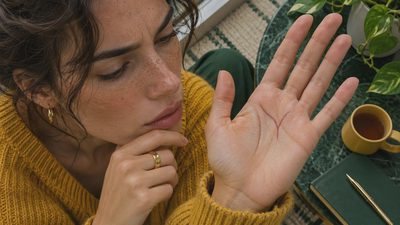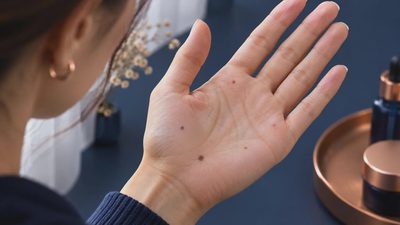
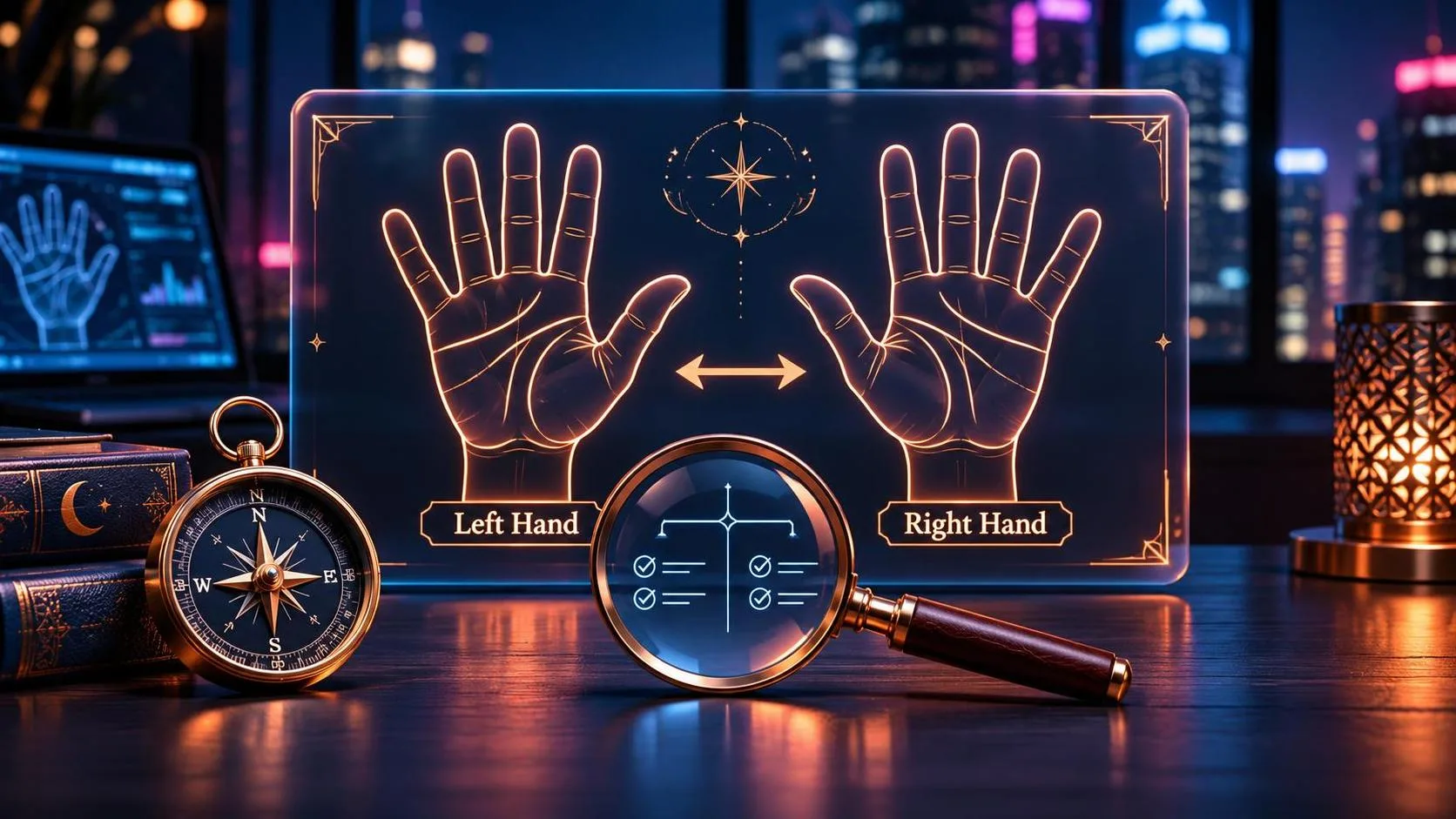
If you have ever held up your palm and wondered about palmistry right or left hand, you are asking one of the first questions nearly every beginner has. The short answer is simple: look at both hands, but begin with the hand that reflects how you currently move through life. Traditional readers often compare one hand associated with inherited tendencies and one associated with developed choices. The exact assignment changes across schools, so the most useful approach is observation first, interpretation second.
The traditional answer to palmistry right or left hand
In many modern Western palmistry systems, the dominant hand is read as the active hand. It is connected with present habits, practiced abilities, decisions, and the way a person has shaped their life. The nondominant hand is often treated as a quieter reference point, showing early patterns, natural inclinations, or qualities that may feel less visible day to day.
That does not mean the nondominant palm is your fixed destiny. A line that looks faint on one hand and clearer on the other can simply invite a conversation about change. Someone who grew up shy may now speak confidently at work. Someone who once rushed into every plan may have learned to pause. Palmistry gives those contrasts a visual language, but your choices remain more important than any line.
If you write with your right hand, start there, then compare it with the left. If you write with your left, reverse that order. For an ambidextrous person, use the hand that feels more natural for writing, drawing, or handling small objects, then examine the other palm for context. This practical answer to palmistry right or left hand is less mysterious than it sounds: read the hand you actively use, and do not ignore its companion.
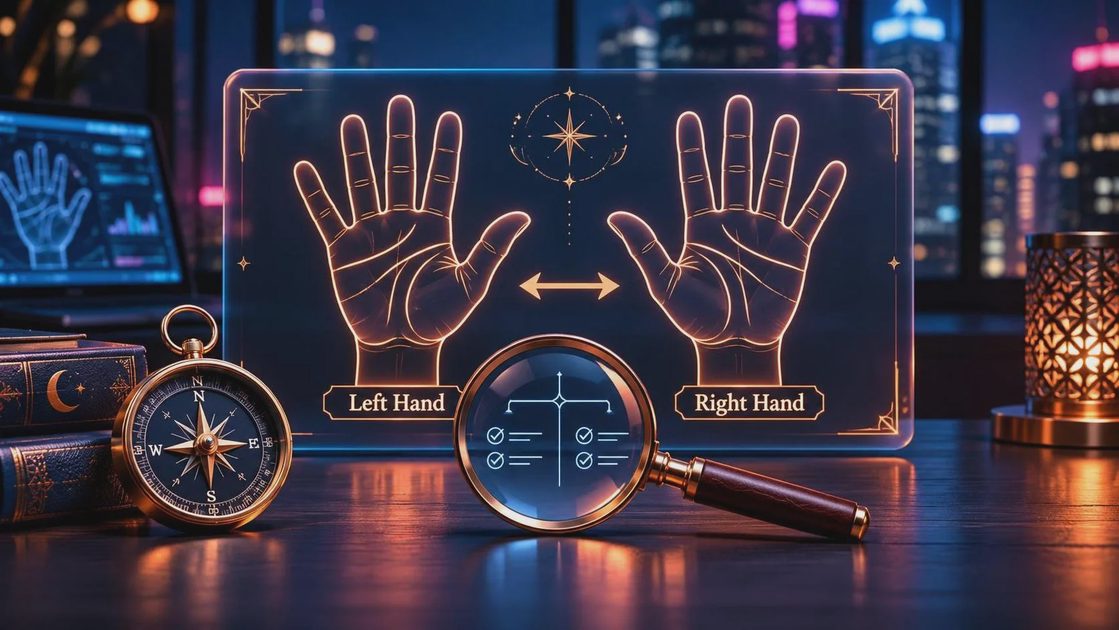
How to compare both palms without getting overwhelmed
Begin with a clear photograph or a relaxed, open hand under soft daylight. Avoid pressing the fingers together, since that can hide the spaces between them and change the shape of the palm. Notice the broad features before chasing every tiny crease: palm shape, finger length, thumb flexibility, major lines, and the raised areas beneath the fingers and thumb.
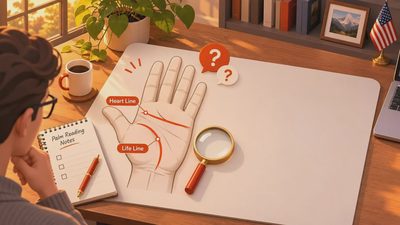
The heart line usually runs below the fingers and is traditionally connected with emotional expression and relationship style. The head line crosses the middle of the palm and is often discussed in relation to attention, reasoning, and imagination. The life line curves around the base of the thumb. It is not a countdown or a prediction of lifespan; readers more responsibly describe its depth, curve, and relationship to the rest of the hand.
When comparing hands, ask what changed rather than which palm is “correct.” Is the head line more visible on the dominant hand? Does the heart line appear straighter, deeper, or more broken on one side? Are both palms broadly similar, or do they show a striking contrast? Take notes in neutral language first. “Deep curved line” is an observation. “This person is passionate” is an interpretation that should remain open to discussion.
A useful answer to palmistry right or left hand often comes from the difference between the two. The comparison can become a gentle prompt: where have you become more decisive, guarded, expressive, or adaptable? That question is usually more rewarding than trying to force one dramatic meaning from a single crease.
What beginners commonly misunderstand
The biggest mistake is treating palm lines like permanent labels. Hands change with age, work, skin texture, hydration, and repeated movement. Fine lines can look stronger after a long day of manual activity, while dry skin can make details harder to see. Lighting and camera angle also create false differences, especially in phone photos.
Another common mistake is assuming a short life line means a short life. Traditional palmistry does not need to be used that way, and fear-based readings are neither kind nor useful. A life line can be discussed as a symbolic feature related to energy, grounding, or a person’s relationship with activity. It cannot diagnose health, establish a lifespan, or replace medical advice.
The same care applies to relationship questions. A broken heart line does not prove heartbreak, and a faint line does not mean someone cannot love. There are several plausible explanations for nearly every palm feature. Let the person’s real experiences guide the conversation instead of making the hand overrule the person.
This is why palmistry right or left hand should be treated as a reflective tool. It can help someone tell a story about growth, attention, family patterns, or confidence. It becomes less helpful when it is presented as an unavoidable verdict.

A simple palm-reading routine for friends and partners
Set aside ten quiet minutes and ask permission before looking closely. Start with the dominant hand, describe three visible details, and ask whether they feel familiar. Then compare the other hand without declaring one superior. For example, you might say, “Your dominant hand has a deeper head line and a wider thumb angle. Do you feel you have become more independent and analytical over time?” That wording leaves room for the person to agree, disagree, or add a better explanation.
If you are reading a partner’s palm, avoid turning the session into an interrogation. Ask about current goals, not hidden secrets. If you are reading a parent’s hand, invite memories rather than making predictions. With a friend, a playful observation about a flexible thumb or long fingers can open a conversation about generosity, creativity, or stubbornness, as long as the tone stays curious.
For a photo-based community post, include both palms if the person is comfortable, mention which is dominant, and use natural light. A close crop of the entire hand is more helpful than an artistic image that hides the wrist and fingertips. Readers can then discuss palmistry right or left hand with enough context to make a thoughtful comparison.
Turning a palm reading into a meaningful gift
A palm reading can become the starting point for a gift that feels personal without being overly literal. First consider the recipient’s habits and budget. Someone who journals might enjoy a compact leather notebook with a small hand-drawn palm diagram inside. A friend who loves jewelry may prefer a simple line-inspired bracelet rather than a large fortune-telling symbol. Someone who dislikes mystical objects could appreciate a handwritten letter describing the qualities you noticed instead.
For a modest budget of $15 to $30, choose a pocket notebook, printed palm photo, small candle, or custom card. Around $40 to $80, consider a handmade pendant, framed illustration, or personalized journal set. The price matters less than the story: explain why the gift connects with something real, such as their patience, curiosity, steady encouragement, or talent for starting over.
Do not give a reading that makes the recipient anxious and then sell a solution to that anxiety. A better gift message might say, “I noticed how your two hands seem to tell a story about change, and I picked this because you are always learning.” That keeps the symbolism warm, specific, and grounded.
The best answer depends on the person
So, what is the final answer to palmistry right or left hand? Read both. Begin with the dominant hand when you want to discuss present choices and practiced qualities, then use the other hand as a comparison for earlier patterns or quieter tendencies. If a different tradition gives you another method, treat that as a framework rather than a rule you must defend.
The most interesting reading is not the one that sounds the most certain. It is the one that helps a person recognize something true, ask a useful question, or feel seen by the friend holding their hand. Notice what is visible, explain what readers traditionally associate with it, and then return to lived experience. Which feature on your two palms looks most different, and what change in your life might it be inviting you to talk about?